Fasting with Type 2 Diabetes: Is It Safe?
Is fasting with type 2 diabetes safe? A look at blood sugar effects, medication risks, who should avoid fasting, and how to do it more safely.

In this article(9)
Fasting with type 2 diabetes is a question that more people are asking as intermittent fasting and time-restricted eating gain popularity. The honest answer is that safety depends on your medications, your current blood sugar control, and whether you have a real monitoring plan in place. For some people, structured fasting is reasonable and even helpful. For others, it carries real risk that should not be brushed aside.
This article walks through what actually happens to blood sugar during a fast, the medication-specific concerns that matter most, who should not attempt fasting at all, and the steps that make it safer for those who do try it with their doctor's blessing.
The goal here is not to talk you into or out of fasting. It is to give you a clear picture so the conversation with your healthcare provider is more productive, and so you know what to watch for if you do move forward.
What Happens to Blood Sugar When You Fast
When you stop eating for several hours, your body shifts from using incoming glucose to relying on stored energy. Your blood sugar gradually falls, your insulin levels drop, and your liver begins releasing stored glucose through a process called gluconeogenesis. Your body also starts breaking down fat for energy after roughly 12 to 16 hours, depending on your last meal.
For most people without diabetes, this transition is smooth. For someone with type 2 diabetes, the response is less predictable. Some people see steady improvements in fasting blood sugar over weeks of intermittent fasting. Others experience the "dawn phenomenon" or stress-driven liver glucose release, which can push fasting blood sugar higher rather than lower.
A 2020 review in Diabetes Care examined fasting protocols in adults with type 2 diabetes and found that outcomes varied widely depending on medication use, baseline HbA1c, and the specific fasting window. Some participants saw HbA1c drop by half a percentage point or more. Others experienced hypoglycemia or glucose volatility serious enough to stop the protocol.
The mixed picture is why fasting and type 2 diabetes management require individualization. Two people on the same fasting schedule, eating similar foods, can have very different glucose responses. Continuous glucose monitor (CGM) data has made this much clearer in recent years, and many providers now use CGM readings to guide fasting recommendations rather than going by averages.
Safety Considerations for Fasting with Type 2 Diabetes
The biggest safety variable for fasting type 2 diabetes is your medication list. Some glucose-lowering drugs work with the food you eat, and skipping meals while taking them can cause blood sugar to drop too low.
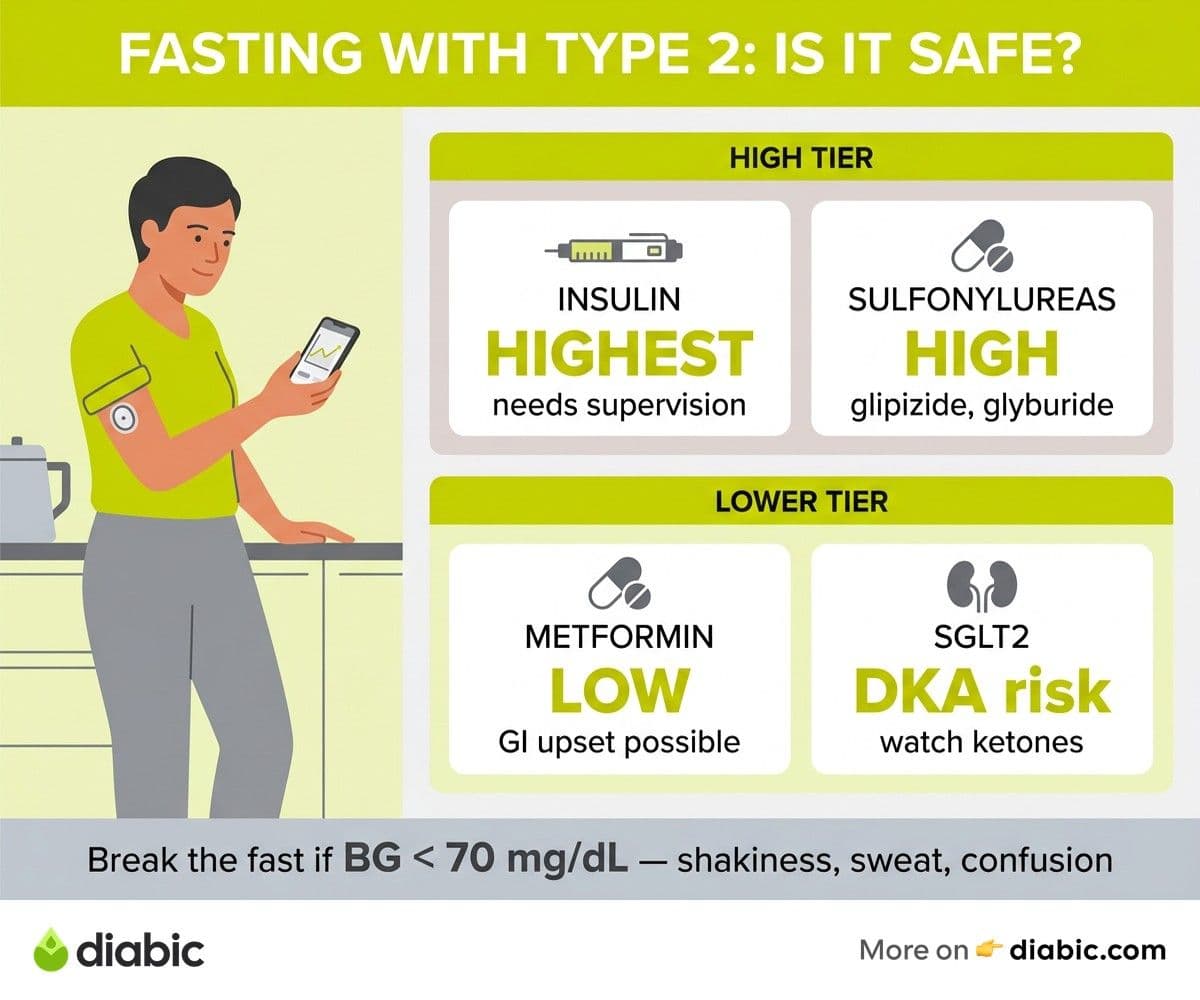
Insulin is the highest-risk category. Both rapid-acting and long-acting insulins can cause hypoglycemia during a fast, and the timing of doses needs careful adjustment. Anyone on insulin who is considering fasting needs medical supervision, ideally from an endocrinologist or a diabetes care specialist.
Sulfonylureas (such as glipizide, glyburide, and glimepiride) are the next-highest risk. These drugs stimulate insulin release whether or not you have eaten, which means a missed meal can produce a serious low. The American Diabetes Association recommends that anyone on sulfonylureas talk to their provider before starting any fasting protocol, and many providers will adjust or replace these medications first.
Metformin and SGLT2 inhibitors carry lower hypoglycemia risk on their own, but they bring other concerns. Metformin can cause stomach upset on an empty stomach. SGLT2 inhibitors carry a small risk of diabetic ketoacidosis during prolonged fasting, even at normal blood sugar levels.
Dehydration and electrolyte balance matter regardless of medication. Many people unintentionally drink less water on fasting days, and dehydration can cause headaches, dizziness, and elevated blood sugar readings. Sodium, potassium, and magnesium need attention too, especially with longer fasting windows. Our overview on fasting and diabetes covers the broader picture if you are weighing different fasting approaches.
Signs to break a fast immediately include shakiness, sweating, confusion, rapid heartbeat, blurred vision, or a blood sugar reading below 70 mg/dL. These are hypoglycemia symptoms and they need fast-acting carbs right away, such as juice, glucose tabs, or regular soda. If symptoms do not resolve within 15 minutes after treatment, that is an urgent medical situation.
Who Should Avoid Fasting
Fasting for type 2 diabetes is not appropriate for everyone, and being honest about that matters more than chasing a trend. The following groups generally should not attempt fasting without specialized medical supervision, and in some cases not at all:
- People on insulin with tight dosing schedules, especially those using mealtime insulin
- Those with frequent or severe hypoglycemia episodes, with or without warning symptoms
- People with hypoglycemia unawareness, where lows do not produce typical warning signs
- Those with kidney disease or other diabetes-related complications
- People with a history of disordered eating
- Pregnant or breastfeeding individuals
- Children and adolescents with type 2 diabetes
- Adults over 70 with significant comorbidities or frailty
If you have had a recent hospitalization for blood sugar issues, a fasting plan is not the next step. Stabilizing your baseline and working with your team comes first. For people considering shorter time-restricted windows rather than full-day fasts, our piece on intermittent fasting for type 2 diabetes walks through the gentler protocols.
A 12-hour overnight window between dinner and breakfast is something almost everyone already does. Stretching that to 14 or 16 hours is a different conversation than a 24-hour fast or alternate-day fasting, and the risk profile changes accordingly.
How to Fast More Safely with Type 2 Diabetes
If you and your doctor have decided that some form of fasting is reasonable for you, a few practices reduce the risk of running into trouble.
Get medical clearance first before starting any fasting with type 2 diabetes plan, and not just a quick mention at your next appointment. Bring up the specific protocol you are considering, share any CGM or fingerstick data you have, and ask how your medications might need to change. Your doctor may want to lower a dose, switch a medication, or have you start with a shorter window before extending.
Start with shorter fasting windows rather than jumping into longer fasts. A 12:12 schedule (12 hours of eating, 12 of fasting) is a reasonable on-ramp. Moving to 14:10 or 16:8 over the course of a few weeks gives your body time to adapt and gives you a chance to see how your blood sugar responds.
Monitor blood sugar frequently during fasts. Check before you start, every few hours during the fasting window, and again before and after your first meal back. If you have a CGM, watch for trends rather than reacting to single readings. Patterns over a week or two tell you more than any single number.
Plan nutrient-dense meals for eating windows. Compressing your eating into a shorter window does not work well if those meals are mostly refined carbs and sugar. Build plates around protein, vegetables, healthy fats, and fiber. Berries and legumes give you fiber and slow-digesting carbs that pair well with fasting recovery meals.
Keep fast-acting glucose nearby. Even with the best monitoring, lows can sneak up. A small tube of glucose tabs in your bag, your car, and your bedside drawer is cheap insurance. Our list of foods to raise blood sugar fast covers what works best for treating a low, including options when you are not at home.
Hydrate consistently. Water, unsweetened tea, and black coffee are usually fine during a fast and help with both hydration and hunger. A pinch of salt in water or a low-sugar electrolyte drink can help during longer windows, but check with your doctor if you have blood pressure or kidney concerns.
From my experience: I tried 16:8 fasting for a stretch a few years ago and saw both upsides and clear limits. The upside was steadier morning blood sugar on most days. The limit was that any stressful week threw the pattern off, and pushing through made everything worse. Knowing when to skip a fast and just eat a normal breakfast turned out to be the most useful skill, and that took a few months to learn.
FAQ
Is it safe to fast with type 2 diabetes?
Fasting can be safe for some people with type 2 diabetes, particularly those on metformin alone or managing diabetes through diet and exercise. People on insulin or sulfonylureas face higher risk and need medical supervision. Anyone considering fasting should talk to their doctor first to review medications, monitoring, and what to do if blood sugar drops too low.
What happens when a type 2 diabetic fasts?
Blood sugar typically drops during a fast, but the liver can release stored glucose in response, sometimes causing an unexpected rise. For most people on oral medications, blood sugar remains in a manageable range. Insulin levels also fall, which over time may improve insulin sensitivity for some people. Frequent monitoring is essential to catch lows or unexpected highs.
How long can a person with type 2 diabetes fast safely?
Short overnight fasts of 12 to 14 hours are usually low-risk for people on diet, metformin, or other low-hypoglycemia medications. Longer fasts of 16 to 24 hours or alternate-day fasting need medical oversight. Multi-day fasts are generally not recommended for people with type 2 diabetes outside a clinical setting.
Can fasting reverse type 2 diabetes?
Some research suggests that intermittent fasting, combined with weight loss and dietary changes, may help some people achieve diabetes remission. Reversal is not guaranteed, and the evidence is strongest in people who have had diabetes for fewer than five to seven years. Talk to your doctor about whether a structured plan is appropriate for your situation.
Fasting with type 2 diabetes is not a shortcut, and it is not the only path to better blood sugar. For the right person, with the right medical support, it can be one useful tool among several. For others, the calmer, lower-stakes work of better meals and more movement does more good without the safety risks.
Shahriar P. Shuvo is the founder of Diabic. He has lived with diabetes for over 14 years, and built Diabic to deliver the practical, evidence-based self-management tools he wished existed when he was first diagnosed. By trade, Shahriar is a senior design and frontend engineer with 6+ years shipping products at Agora, Timescale (now Tiger Data), and ShareTrip. He writes from the intersection of lived diabetes experience and product craft, focused on what works in daily management rather than what sounds good in a textbook.
Medically reviewed by
Dr. Rezwana Parvin Rumpa is an obstetrics and gynaecology specialist with clinical focus on gestational diabetes, PCOS, and fertility. She holds the MRCOG (Final Part) from the Royal College of Obstetricians and Gynaecologists in London, the MRCPI (Final Part) from the Royal College of Physicians of Ireland, and an MBBS from Shaheed Monsur Ali Medical College under Dhaka University. Dr. Rumpa serves as a Senior Medical Officer in the Obs and Gynae department at BRB Hospitals Ltd, where she has spent three years managing prenatal care, emergency obstetric cases, and women's-health surgery. On Diabic, she medically reviews content for women living with diabetes, with particular attention to pregnancy, PCOS, and reproductive-health intersections.
More from Diet & Fitness
View all
7 Sweet Potato Diabetes Recipes That Keep Blood Sugar Steady
Seven sweet potato diabetes recipes with balanced macros, plus the cooking methods and portion tips that keep this naturally sweet vegetable blood-sugar.

Diabetes Pasta Recipes That Won't Spike Blood Sugar
Five diabetes pasta recipes that keep blood sugar steady, plus the cooking trick and pasta swaps that lower glycemic impact for everyday meals.

Chinese Recipes for Diabetes That Taste Like Takeout
Chinese recipes for diabetes that recreate takeout favorites at home with low-sugar swaps, controlled portions, and stir-fries that keep blood sugar.
Clinician-reviewed habits, plain-language guides, and honest answers - the small shifts that make living with diabetes feel lighter, every day.