Desmopressin for Diabetes Insipidus Explained
Learn how desmopressin for diabetes insipidus works, who it helps, common side effects, and what to expect from this hormone replacement therapy.

In this article(13)
You wake up at 3 a.m. for the fourth time tonight, drain another full glass of water, and still feel parched. The bathroom trips never stop, the thirst never quiets, and your bloodwork shows your blood sugar is perfectly normal. If a doctor has mentioned diabetes insipidus and handed you a prescription, you are likely staring at a small bottle or pill packet wondering what comes next.
Desmopressin for diabetes insipidus is the cornerstone treatment for a condition that, despite its name, has nothing to do with insulin or blood glucose. We want to walk you through how this medication works, who it helps, and what daily life looks like once you start taking it. The more you understand the why behind the prescription, the less intimidating the routine becomes.
What Is Diabetes Insipidus
Diabetes insipidus is a rare disorder of water balance, not blood sugar. Your kidneys filter roughly 180 liters of fluid every day and reabsorb almost all of it back into your body. That reabsorption depends on a hormone called antidiuretic hormone, also known as vasopressin or ADH. When ADH is missing or your kidneys ignore it, water pours out as dilute urine and you feel constantly thirsty.
The NIDDK overview of diabetes insipidus describes two main forms of the condition. Central diabetes insipidus happens when the pituitary gland in your brain does not release enough ADH, often after head trauma, surgery, or a tumor. Nephrogenic diabetes insipidus happens when the kidneys themselves do not respond to ADH, sometimes due to genetics, certain medications, or chronic kidney issues.
The shared name with diabetes mellitus causes endless confusion, even among people newly diagnosed. The two conditions both involve thirst and frequent urination, but the mechanisms are completely different. If you want a clearer sense of how the more common forms of diabetes work, our breakdown of type 1 vs type 2 diabetes covers blood sugar regulation, while our guide to type 2 diabetes treatment options walks through medications that target glucose. Diabetes insipidus sits in an entirely different corner of endocrinology.
How Desmopressin for Diabetes Insipidus Works
Desmopressin is a synthetic version of vasopressin, the same hormone your body would normally make on its own. It binds to receptors on the cells lining your kidney's collecting ducts and tells those cells to pull water back into circulation. The result is more concentrated urine, smaller urine volumes, and far less thirst.
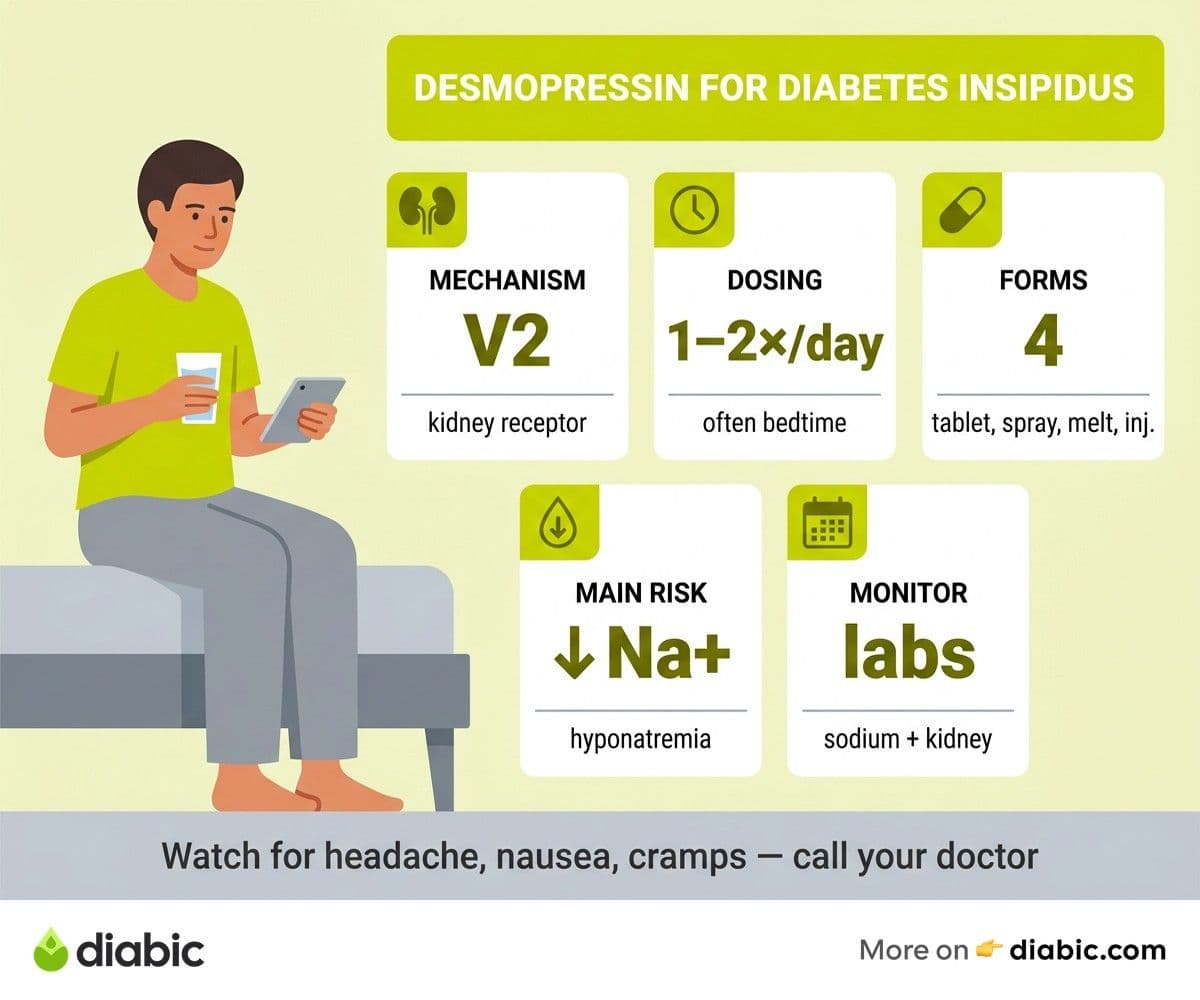
According to clinical guidance from the Endocrine Society, desmopressin specifically targets the V2 receptor in the kidneys, which is responsible for water reabsorption. The drug is engineered to skip the V1 receptor that affects blood vessels, so it does not raise your blood pressure or cause the cardiovascular effects of natural vasopressin. That selectivity is part of why it has been a trusted treatment for decades.
You can take desmopressin in several forms, including a nasal spray, an oral tablet, a sublingual melt, and an injection used in hospital settings. Each form has slightly different absorption rates and onset times, which is why your endocrinologist chooses based on your age, lifestyle, and how reliably you can use a particular delivery method. Many people start with a tablet and adjust later if absorption is inconsistent.
Who Desmopressin Is For
Desmopressin is primarily prescribed for central diabetes insipidus, where the brain is not making enough ADH. Replacing the hormone directly addresses the missing piece, and most people see a dramatic reduction in thirst and urine output within hours of the first dose. It is often a lifelong medication, although some causes of central diabetes insipidus can be temporary.
People recovering from pituitary surgery or traumatic brain injury sometimes develop a short-lived form of the condition that may resolve in weeks or months. In those situations, desmopressin acts as a bridge while the body recovers, with regular reassessment to see whether the medication is still needed. Children with central diabetes insipidus can also use desmopressin safely, although pediatric dosing requires close monitoring of growth and electrolytes.
Nephrogenic diabetes insipidus is a different story. Because the issue is at the kidney level rather than the brain, adding more ADH usually does not help. Treatment for that form often involves dietary adjustments, thiazide diuretics, and addressing the underlying cause, which is why a clear diagnosis matters before any prescription is written. Talk to your doctor about which type you have and why a particular medication was chosen for you.
Common Side Effects of Desmopressin
The most important risk to understand with desmopressin is hyponatremia, which means low sodium in your blood. Because the medication tells your kidneys to hold onto water, drinking too much fluid while taking it can dilute your sodium to dangerous levels. Research published in the Journal of Clinical Endocrinology and Metabolism consistently identifies hyponatremia as the leading safety concern with desmopressin therapy.
Early signs of low sodium include headache, nausea, fatigue, muscle cramps, and confusion. Severe drops can cause seizures or loss of consciousness, although this is uncommon when fluid intake is sensible and labs are checked regularly. Your provider will likely schedule periodic blood tests, especially in the first weeks after starting treatment or after any dose change, to make sure your sodium stays in a safe range.
Beyond hyponatremia, you may notice milder side effects. Nasal sprays can cause nasal congestion, nosebleeds, or sinus discomfort, particularly during cold and flu season when absorption may shift. Oral forms sometimes cause mild stomach upset, and a small number of people experience headache or facial flushing right after a dose. Most of these effects fade once your body adjusts or your provider fine-tunes your prescription.
Dosage and How to Take Desmopressin
Desmopressin dosing is highly personal, and the prescribing information from the FDA emphasizes that doses should be titrated to each individual rather than copied from a chart. Two people with the same diagnosis might need very different amounts based on body size, kidney function, age, and how strongly their thirst signal still works. Talk to your doctor about how to start and how the dose will be adjusted over time.
Most people on desmopressin for diabetes insipidus take it once or twice a day, often with one dose at bedtime to help reduce nighttime urination. Your provider may suggest a brief window of dilute urine before each dose, sometimes called a "breakthrough," to confirm that the medication is wearing off and your sodium is not climbing in the wrong direction. This is a built-in safety check, not a sign that the medication is failing.
If you miss a dose, the general rule is to skip it and take the next dose at the regular time rather than doubling up. Doubling can push your fluid balance too far and increase the risk of low sodium. We cannot stress enough that you should never adjust your own dose without talking to the prescribing clinician, even on days when you feel thirstier or less thirsty than usual.
Storage and travel notes
Tablets and sublingual forms travel well at room temperature, while nasal sprays and injections may need refrigeration depending on the brand. Keep a small supply in your carry-on bag if you fly, and bring your prescription label so security staff can verify the medication. A short letter from your endocrinologist explaining your condition can save time at international borders.
Living with Diabetes Insipidus on Desmopressin
Daily life on desmopressin is far easier than life without it, but it asks you to pay closer attention to fluids than the average person. Your goal is to drink when genuinely thirsty rather than sipping all day out of habit, because the medication is already helping your body conserve water. Many people find that a refillable bottle with measurement marks helps them notice patterns instead of guessing.
Wearing medical identification, whether a bracelet, necklace, or wallet card, gives emergency responders critical information if you cannot speak for yourself. The Mayo Clinic patient resources recommend medical alert jewelry for anyone on long-term hormone replacement therapy, and diabetes insipidus is on that list. The cost is small, and the peace of mind is real.
Travel and illness deserve a quick plan. Stomach bugs, fevers, and very hot weather can shift your fluid balance quickly, and that is when sodium imbalances are most likely to sneak up on you. Knowing when to go to the ER for diabetes-related concerns is useful general background, and for diabetes insipidus specifically you should call your endocrinologist if you have persistent vomiting, severe headache, or sudden weight changes that do not match your eating.
Routine lab monitoring
Expect regular blood draws to check sodium, kidney function, and sometimes urine concentration. These visits are not just paperwork. They tell your provider whether your current dose is still right and whether anything else in your health picture is shifting. We encourage you to ask for copies of your labs so you can track trends in your own records.
Frequently Asked Questions
How does desmopressin work for diabetes insipidus?
Desmopressin is a synthetic version of vasopressin, the hormone your body normally uses to tell your kidneys to retain water. In central diabetes insipidus, the brain does not produce enough of this hormone on its own, so desmopressin steps in as replacement therapy. It binds to V2 receptors in the kidneys, helps concentrate urine, and reduces the extreme thirst that defines the condition.
What are the side effects of desmopressin?
The most significant risk is hyponatremia, which is dangerously low sodium in the blood, and it usually happens when fluid intake is too high while on the medication. Other possible effects include headache, nausea, nasal congestion with the spray form, and occasional facial flushing. Your provider will monitor your sodium with periodic blood tests, especially after any dose change.
Is desmopressin the same as insulin?
No, the two medications are completely different. Insulin lowers blood sugar in people with diabetes mellitus, while desmopressin replaces a water-balance hormone in people with diabetes insipidus. The conditions share part of a name but involve different organs, hormones, and treatments.
Can I drink alcohol while taking desmopressin?
Alcohol can interfere with how your body regulates fluid balance and may increase the risk of side effects. Talk to your doctor about whether occasional drinking is safe in your situation and what limits make sense for you.
We hope this look at desmopressin for diabetes insipidus has made the medication feel more like a tool you understand and less like a mystery. The condition is rare, the medication is well studied, and most people who start desmopressin find that their symptoms ease quickly. If anything in this post raised new questions, write them down for your next appointment so you and your endocrinologist can work through them together.
Shahriar P. Shuvo is the founder of Diabic. He has lived with diabetes for over 14 years, and built Diabic to deliver the practical, evidence-based self-management tools he wished existed when he was first diagnosed. By trade, Shahriar is a senior design and frontend engineer with 6+ years shipping products at Agora, Timescale (now Tiger Data), and ShareTrip. He writes from the intersection of lived diabetes experience and product craft, focused on what works in daily management rather than what sounds good in a textbook.
Medically reviewed by
Dr. Rezwana Parvin Rumpa is an obstetrics and gynaecology specialist with clinical focus on gestational diabetes, PCOS, and fertility. She holds the MRCOG (Final Part) from the Royal College of Obstetricians and Gynaecologists in London, the MRCPI (Final Part) from the Royal College of Physicians of Ireland, and an MBBS from Shaheed Monsur Ali Medical College under Dhaka University. Dr. Rumpa serves as a Senior Medical Officer in the Obs and Gynae department at BRB Hospitals Ltd, where she has spent three years managing prenatal care, emergency obstetric cases, and women's-health surgery. On Diabic, she medically reviews content for women living with diabetes, with particular attention to pregnancy, PCOS, and reproductive-health intersections.
More from Treatment & Medication
View all
Dawn Phenomenon vs Somogyi Effect: Night Spikes
Dawn phenomenon vs Somogyi effect explained. Learn why blood sugar spikes overnight, how to test for each, and what to talk to your provider about.

Glucose Test During Pregnancy: What to Expect
A warm, plain-language glucose test pregnancy guide covering the one-hour screening, three-hour OGTT, prep tips, and what your results actually mean.

What Is Type 3 Diabetes? A Closer Look
Type 3 diabetes is an unofficial term for brain insulin resistance linked to Alzheimer's. Learn what the research shows and how to protect cognitive.
Clinician-reviewed habits, plain-language guides, and honest answers - the small shifts that make living with diabetes feel lighter, every day.