How to Follow a Mediterranean Diet for Diabetes
A practical guide to the diabetes Mediterranean diet, including what to eat, sample meals, and easy ways to start without overhauling your kitchen.

In this article(14)
If you have spent any time researching what to eat with diabetes, you have probably bumped into the Mediterranean approach more than once. There is a reason it keeps showing up. The diabetes Mediterranean diet is one of the most studied eating patterns for blood sugar management, and unlike many diets, it does not feel restrictive once you settle into it.
The pattern leans on vegetables, legumes, fish, whole grains, and olive oil. It is generous with flavor and forgiving when you are not perfect. For someone managing type 2 diabetes, that combination tends to be more sustainable than rigid meal plans, which is half the reason it works in the first place.
This guide walks through what makes it effective, what a real day of eating looks like, and how to ease into it without remodeling your pantry on day one.
What Makes the Diabetes Mediterranean Diet Work
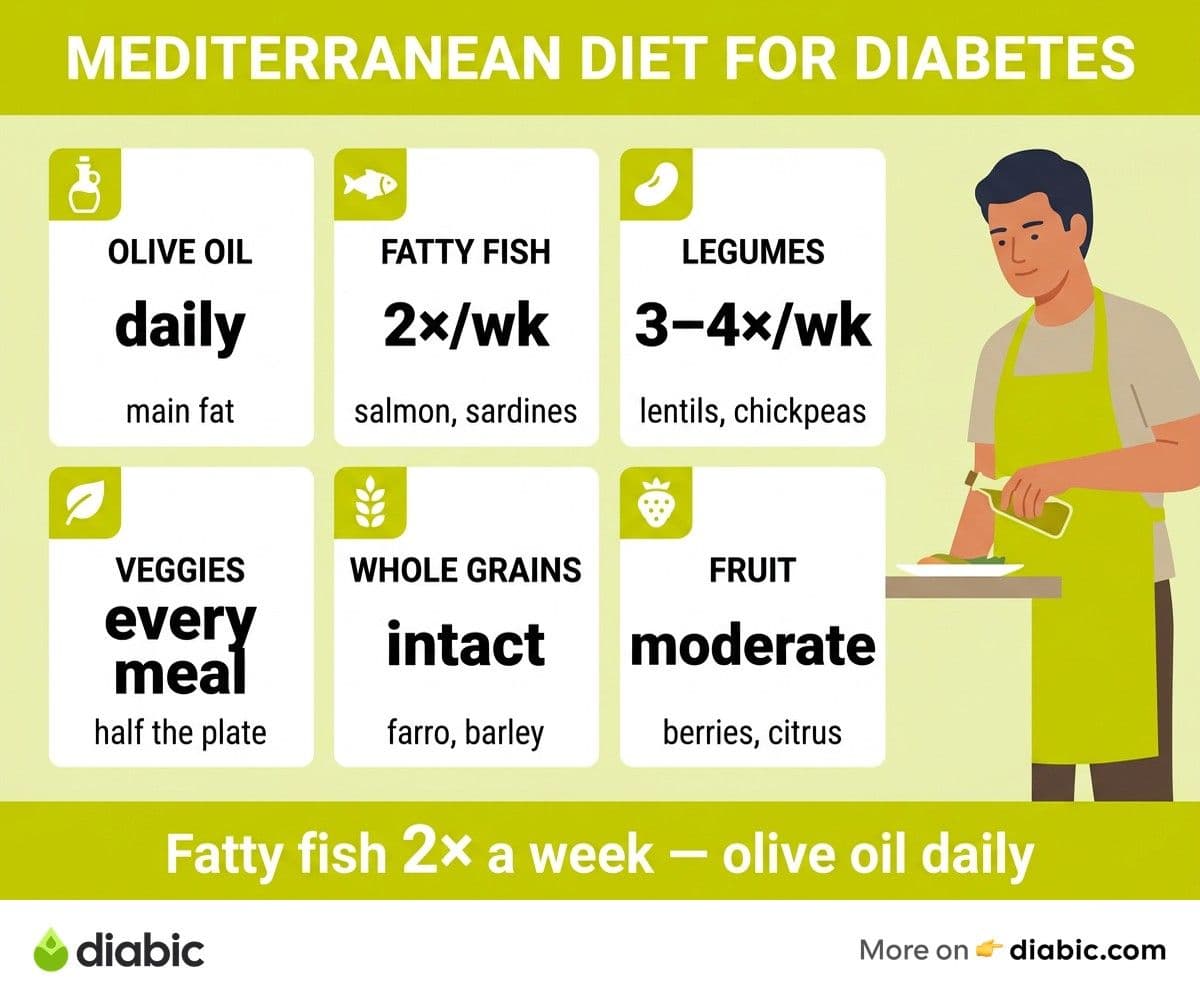
The Mediterranean diet is less a strict plan and more a way of building meals around plants, healthy fats, and unprocessed proteins. Olive oil is the main fat. Fish and legumes carry most of the protein. Refined sugar, ultra-processed foods, and red meat sit at the edges rather than the center of the plate.
For people with diabetes, the most useful research comes from a series of large clinical trials. The landmark PREDIMED study, published in The New England Journal of Medicine, followed thousands of adults at high cardiovascular risk and found that those who followed a Mediterranean diet supplemented with olive oil or nuts had significantly lower rates of major cardiovascular events than those on a low-fat diet. A meaningful share of those participants had type 2 diabetes.
Other trials have shown improvements in A1C, fasting glucose, and insulin sensitivity. The American Diabetes Association lists the Mediterranean pattern as one of its recommended eating styles for diabetes management, alongside vegetarian and DASH approaches.
Why does it work? Two reasons stand out. The diet is naturally rich in fiber and slow-digesting carbs, which softens post-meal blood sugar rises. It is also anti-inflammatory thanks to olive oil, fatty fish, nuts, and a heavy dose of vegetables, and chronic inflammation is increasingly seen as a driver of insulin resistance.
If you are still building the basics of a diabetes-friendly eating routine, our healthy eating rules for type 2 diabetes is a good companion read.
A Diabetes-Friendly Mediterranean Food List
You do not need imported ingredients or specialty stores to follow this pattern. Most of what you need is already in a regular grocery store. Here is how the food groups break down for a healthy diet for people with diabetes built around Mediterranean principles.
Healthy fats are the backbone of the pattern. Extra-virgin olive oil is the daily go-to for cooking, dressings, and finishing dishes. Avocados, olives, and a small handful of nuts (almonds, walnuts, pistachios) round out the category.
Proteins lean toward fish and plants. Aim for fatty fish like salmon, sardines, or mackerel twice a week for omega-3s. Poultry and eggs are fine in moderation. Legumes (lentils, chickpeas, white beans) appear several times a week and double as a fiber source.
Carbohydrates in this pattern come from whole grains and produce, not refined flour. Think farro, barley, bulgur, whole-grain bread, and brown rice. Fruits are welcome in moderation, with berries, citrus, apples, and pears being especially friendly to blood sugar.
Vegetables show up at almost every meal. Leafy greens, tomatoes, peppers, eggplant, zucchini, broccoli, and onions form the base of countless Mediterranean dishes. Aim for variety and color rather than chasing any one "superfood."
What to limit matters too. Red and processed meats sit at the edges (think a few times a month rather than weekly). Added sugars, sugary drinks, and ultra-processed snacks are minimized. Butter and cream are used sparingly, with olive oil taking the lead. The Mayo Clinic keeps a useful reference if you want a deeper food-by-food breakdown.
How to Build Mediterranean Meals for Blood Sugar Balance
A diabetes-friendly diet is easier to stick with when you have a few default meals you can rotate. Below are simple Mediterranean meal ideas that pair well with steady blood sugar.
Breakfast ideas
Greek yogurt with berries, a tablespoon of chopped walnuts, and a drizzle of olive oil or a sprinkle of cinnamon is a fast option that keeps you full. Another easy choice is a vegetable frittata cooked in olive oil with spinach, tomatoes, and a little feta. Whole-grain toast with mashed avocado and a soft-boiled egg works on busier mornings.
Lunch ideas
Grain bowls are your friend. A base of farro or barley, topped with chickpeas, cucumbers, cherry tomatoes, olives, parsley, feta, and an olive-oil-lemon dressing comes together in minutes if you cook the grains in batches. A big Mediterranean salad with greens, white beans, tuna or grilled chicken, and a handful of olives is another reliable option.
Dinner ideas
Grilled or baked fish with a tray of roasted vegetables (zucchini, peppers, eggplant) and a small side of quinoa is a default Mediterranean dinner. Lentil soup with crusty whole-grain bread covers a meatless night. Chicken thighs braised with tomatoes, garlic, and olives over a small portion of bulgur works for nights when you want comfort food. Our roundup of fish recipes for diabetes and diabetes salad recipes can help fill out the rotation.
Snack ideas
Hummus with cucumber and bell pepper sticks, a small handful of almonds with an apple, or Greek yogurt with a few berries all sit comfortably inside the pattern. Olives and a small piece of cheese can also tide you over without spiking blood sugar.
If you are at the prediabetes stage and trying to slow progression, our guide to a Mediterranean diet for prediabetes covers the same pattern with prevention in mind.
Practical Tips for Getting Started
You do not have to overhaul your kitchen this weekend. The most sustainable way into a diabetes Mediterranean diet is to make a few small, repeatable swaps and let them stack up.
Start with these moves over the next two to four weeks:
- Replace butter with extra-virgin olive oil for cooking and dressing salads. This single swap shifts the fat profile of your meals significantly.
- Add one extra serving of vegetables to lunch and dinner. A side salad, a roasted tray of vegetables, or sauteed greens all count.
- Schedule fish twice a week. Canned salmon, sardines, or tuna packed in olive oil are inexpensive and require almost no prep.
- Stock a Mediterranean pantry: canned beans and chickpeas, whole-grain pasta, farro or barley, jarred olives, canned tomatoes, dried herbs, and a good bottle of olive oil.
- Build a "house salad" you can make in five minutes with whatever produce you have on hand. Greens, beans, a vegetable, olive oil, and lemon is enough.
From my experience: I have lived with diabetes for 14 years, and adopting Mediterranean defaults made my eating less of a daily decision. When the pantry is full of beans, olive oil, canned fish, and whole grains, the "what's for dinner?" question almost answers itself, and my numbers stayed steadier because of it.
Common Questions About the Mediterranean Diet and Diabetes
A few questions come up almost every time someone considers this pattern. Quick answers below.
Can you eat bread? Yes, but choose 100 percent whole-grain bread, ideally one with visible seeds and a short ingredient list. Pair it with protein or fat (olive oil, hummus, eggs) rather than eating it on its own.
Is wine allowed? The traditional pattern includes a small glass of red wine with meals, but alcohol is not required. For people with diabetes, especially those on insulin or sulfonylureas, alcohol can cause low blood sugar hours later. Talk to your doctor about whether and how much fits your situation.
How does it compare to low-carb approaches? The Mediterranean diet is moderate in carbohydrate, not low-carb. Both approaches can improve blood sugar, and a meta-analysis in Diabetes Care showed Mediterranean eating produced meaningful A1C improvements. The right choice depends on personal preference, medication, and what you can realistically stick with.
Will it help with weight loss? Often yes, partly because high-fiber, high-protein meals are more filling. But the Mediterranean diet is not designed primarily as a weight-loss plan. Its bigger contribution is on cardiovascular health and metabolic markers, both of which matter a lot when you have diabetes.
FAQ
What do you eat on a Mediterranean diet for diabetes?
Build meals around vegetables, fruits, whole grains, legumes, nuts, olive oil, and fish. Limit red meat to a few times a month and choose poultry, eggs, or plant proteins most days. The key is keeping refined carbs and added sugars at the edges of your plate, not the center.
Is the Mediterranean diet good for type 2 diabetes?
Multiple studies show that the Mediterranean diet may improve blood sugar control, lower A1C, and reduce cardiovascular risk in people with type 2 diabetes. The American Diabetes Association recognizes it as one of the recommended eating patterns. Talk to your doctor or a registered dietitian about how to adapt it for your situation.
How quickly does the Mediterranean diet lower blood sugar?
Some people notice changes in fasting glucose and post-meal numbers within a few weeks, while A1C improvements typically take 8 to 12 weeks to show up since A1C reflects three months of average blood sugar. Consistent meals, not perfection, drive most of the benefit.
Can I follow the Mediterranean diet on a budget?
Yes. Canned beans, frozen vegetables, canned fish (tuna, sardines, salmon), eggs, whole grains, and seasonal produce keep costs reasonable. Olive oil is the main upfront investment, but a bottle lasts weeks and replaces other fats.
A diabetes Mediterranean diet rewards consistency more than perfection. Pick one or two changes from this guide, run them for a few weeks, and let your blood sugar trends and your appetite tell you what to add next.
Shahriar P. Shuvo is the founder of Diabic. He has lived with diabetes for over 14 years, and built Diabic to deliver the practical, evidence-based self-management tools he wished existed when he was first diagnosed. By trade, Shahriar is a senior design and frontend engineer with 6+ years shipping products at Agora, Timescale (now Tiger Data), and ShareTrip. He writes from the intersection of lived diabetes experience and product craft, focused on what works in daily management rather than what sounds good in a textbook.
Medically reviewed by
Dr. Shanto Arian is an internal medicine physician now specializing in clinical and aesthetic dermatology, with a parallel academic focus on epidemiology and public health. He holds an MBBS, MPH, MSc (UK), MRCP (UK), MRCPI (Ireland), Diploma in Dermatology (UK), and Diploma in Aesthetic Medicine (USA). Dr. Arian trained in internal medicine, including hospital work on hematology cases such as graft-versus-host disease, before moving toward dermatology. Skin is one of the earliest places diabetes shows itself, from acanthosis nigricans and diabetic dermopathy to slow foot wound healing, and that intersection is where his clinical and Diabic-review work meet. On Diabic, Dr. Arian medically reviews content on diabetes diagnosis, complications, dermatologic manifestations, and pharmacotherapy, ensuring every claim aligns with current ADA, NICE, and peer-reviewed literature.
More from Diet & Fitness
View all
7 Sweet Potato Diabetes Recipes That Keep Blood Sugar Steady
Seven sweet potato diabetes recipes with balanced macros, plus the cooking methods and portion tips that keep this naturally sweet vegetable blood-sugar.

Diabetes Pasta Recipes That Won't Spike Blood Sugar
Five diabetes pasta recipes that keep blood sugar steady, plus the cooking trick and pasta swaps that lower glycemic impact for everyday meals.

Chinese Recipes for Diabetes That Taste Like Takeout
Chinese recipes for diabetes that recreate takeout favorites at home with low-sugar swaps, controlled portions, and stir-fries that keep blood sugar.
Clinician-reviewed habits, plain-language guides, and honest answers - the small shifts that make living with diabetes feel lighter, every day.