The Insulin Resistance Diet: What to Eat
An insulin resistance diet built on real food, balanced meals, and sustainable habits. See what to eat, what to limit, and a sample day to start with.

In this article(22)
Finding the right insulin resistance diet can feel like navigating a maze of conflicting advice. Some sources say cut all carbs. Others say eat more fat. Meanwhile, your blood sugar keeps doing its own thing, and the latest viral meal plan looks nothing like what your dietitian suggested.
Here is the calmer truth. Decades of research point to a fairly consistent picture of what works: a diet built on whole foods, balanced meals, and a steady relationship between carbs, protein, fat, and fiber. The details flex around personal preference, culture, and lifestyle.
This guide walks through what to eat, what to limit, a sample day, and the lifestyle pieces that quietly do half the work.
What Insulin Resistance Is and Why Diet Matters
Insulin resistance is what happens when your cells stop responding well to the insulin your pancreas produces. Glucose stays in the bloodstream longer than it should, your pancreas pumps out more insulin to compensate, and over time that pattern can lead to prediabetes, type 2 diabetes, and a tangle of related metabolic issues. The National Institutes of Health explains that lifestyle factors, especially diet and physical activity, are central to both prevention and reversal.
A healthy diet for people with diabetes is also a healthy diet for anyone with insulin resistance. The two conditions share the same underlying problem: the body needs help moving glucose into cells without spiking insulin levels through the roof. Food choices are one of the most direct levers you have on that process.
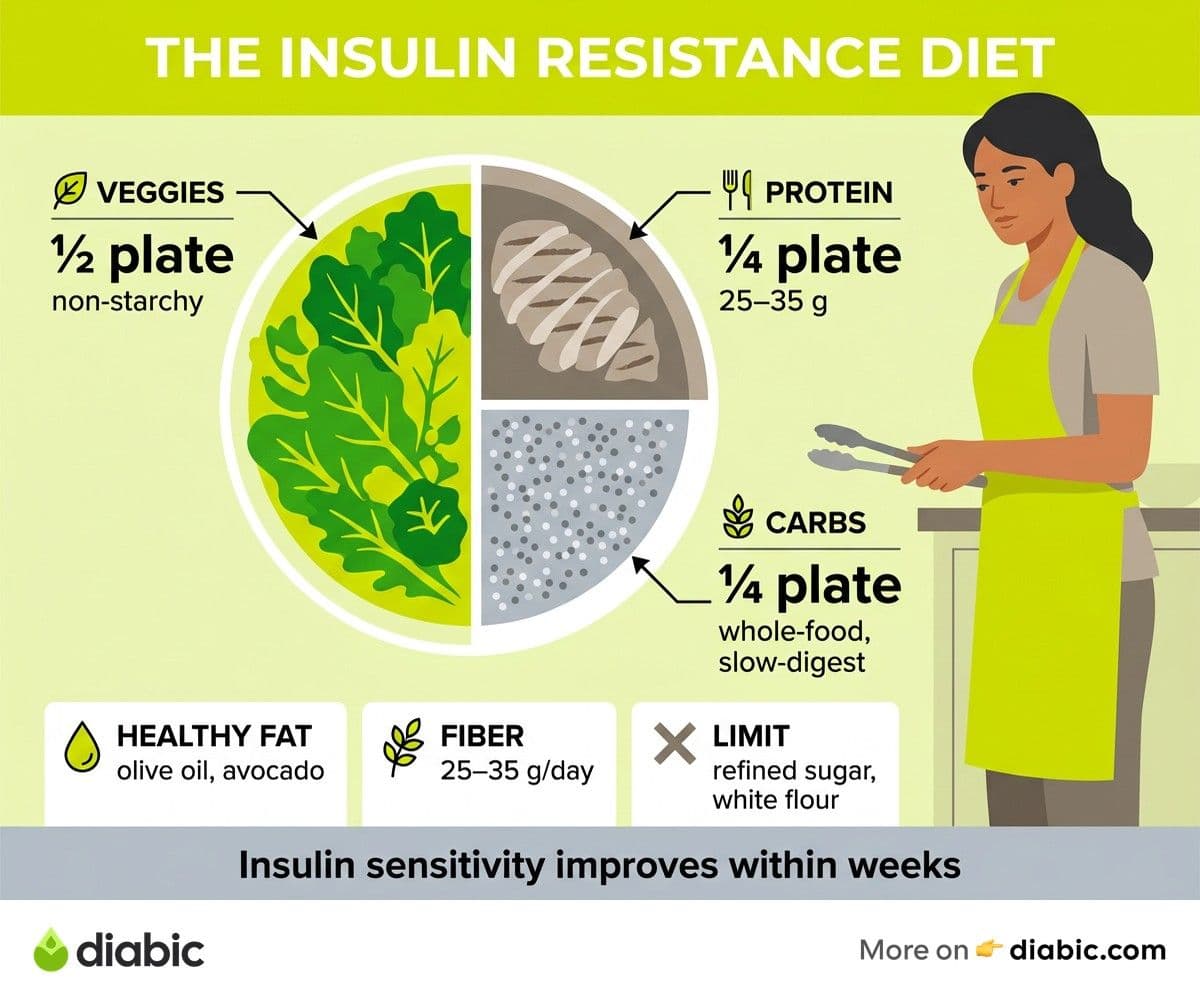
The good news is that insulin sensitivity responds to dietary changes faster than most people expect. Studies often show measurable improvements within weeks, not months. You do not need a perfect diet to make a real difference. You need a workable one.
How insulin resistance connects to type 2 diabetes and prediabetes
Insulin resistance usually develops years before any diagnosis. Many people have it for a decade or more before fasting glucose creeps into the prediabetes range. By the time blood sugar shows up as a problem on a routine lab, the underlying resistance has been building quietly.
This is why dietary changes tend to feel slower than other interventions at first. You are not just lowering today's blood sugar. You are unwinding a pattern that took years to establish. The payoff is real, but it requires consistency rather than intensity.
Foods to Eat on an Insulin Resistance Diet
Building meals around the right foundation makes everything else easier. A low glycemic diet and diabetes care share the same core principle: choose foods that release glucose slowly, pair them with protein and fat, and keep portions reasonable. You do not need to memorize glycemic index numbers to do this well.
Research published in Diabetes Care consistently points to dietary patterns rich in vegetables, legumes, whole grains, lean proteins, and unsaturated fats as the most effective for improving insulin sensitivity. The Mediterranean pattern, the DASH pattern, and various plant-forward approaches all share these elements.
For a deeper look at how to apply glycemic principles, our guide to a low glycemic diet and diabetes walks through the practical details. The Mediterranean approach, which we cover in our Mediterranean diet for diabetes guide, is one of the most studied versions of an insulin-sensitivity-friendly diet.
Non-starchy vegetables: the foundation of every meal
Non-starchy vegetables should make up the largest portion of your plate at most meals. Leafy greens, broccoli, cauliflower, peppers, zucchini, mushrooms, asparagus, tomatoes, cucumbers, and the rest of the produce aisle all qualify. These foods are nutrient-dense, fiber-rich, and have minimal impact on blood sugar.
Aim to fill half your plate with non-starchy vegetables at lunch and dinner. This is the single easiest habit to build and the one with the most reliable benefit.
Lean proteins for satiety and steady glucose
Protein at every meal helps slow glucose absorption, supports muscle mass, and keeps hunger in check between meals. Good options include fish (especially fatty fish like salmon and sardines), chicken or turkey, eggs, plain Greek yogurt, cottage cheese, tofu, tempeh, edamame, and legumes like lentils, chickpeas, and black beans.
A reasonable target is roughly 25 to 35 grams of protein per main meal, adjusted for your size and activity level. People who under-eat protein often struggle with hunger between meals and reach for refined carbs to fill the gap.
Healthy fats that support insulin sensitivity
Unsaturated fats from olive oil, avocado, nuts, seeds, and fatty fish help slow glucose absorption and support cardiovascular health, which matters because heart disease is closely linked with insulin resistance. Extra virgin olive oil in particular has strong research support in the context of metabolic health.
Fat is not the enemy in this style of eating. The point is choosing the right kinds, in reasonable portions, and pairing them with the rest of the meal rather than treating them as a free-for-all.
Low-glycemic carbohydrates done right
Carbohydrates are not banned. The goal is choosing types that release glucose more gradually and eating them as part of a balanced meal. Sweet potatoes, quinoa, steel-cut oats, barley, lentils, beans, berries, apples, and pears all work well in moderate portions.
Pairing carbs with protein, fat, and fiber blunts the glucose response significantly. A bowl of plain oatmeal hits your blood sugar harder than the same oatmeal topped with almond butter, chia seeds, and a few berries.
Foods to Limit or Avoid
A diabetes friendly diet is not about a long list of forbidden foods. It is about recognizing which foods consistently make insulin resistance worse and treating them as occasional rather than routine. The categories to scale back are predictable and well-supported by the American Diabetes Association nutrition guidelines.
Refined carbs and added sugars
White bread, white rice, instant pasta, breakfast cereals, pastries, candy, and most desserts cause sharp glucose spikes followed by sharp insulin responses. Over time, that pattern worsens insulin resistance. Replacing these with whole-grain or higher-protein versions makes a meaningful difference.
Added sugars hide in places you might not expect: pasta sauce, salad dressing, granola bars, flavored yogurt, and many "health" foods. Reading labels for grams of added sugar (separate from naturally occurring sugar) helps you spot the offenders.
Trans fats and highly processed snacks
Trans fats are mostly out of the U.S. food supply now, but partially hydrogenated oils still appear in some imported snacks and baked goods. More broadly, ultra-processed snack foods that combine refined flour, oil, sugar, and salt tend to drive overeating and worsen metabolic health regardless of any single ingredient.
The pattern matters more than any single food. Eating these as occasional treats is fine. Eating them as a foundation of your daily intake is what causes problems.
Sugary beverages including fruit juice
Liquid sugar enters the bloodstream faster than almost any other form. Soda, sweetened coffee drinks, sports drinks, energy drinks, and yes, even 100% fruit juice all spike blood sugar quickly because they lack the fiber that whole fruit provides. Replacing these with water, sparkling water, unsweetened tea, or coffee is one of the highest-uses changes you can make.
If you enjoy juice, treat it like dessert. A small glass with a meal, occasionally, rather than as a daily beverage.
Why "sugar-free" labeled foods can still be problematic
"Sugar-free" does not mean "blood sugar-friendly." Many sugar-free baked goods replace sugar with refined starches that hit your glucose just as hard. Sugar alcohols can cause digestive upset for some people. The label is a starting point, not a green light.
A Sample Day on This Eating Pattern
Concrete examples are more useful than abstract principles. Here is what a balanced day might look like, with the understanding that portions and specific foods should flex around your preferences and what your body responds to.
Breakfast: Two scrambled eggs with sauteed spinach and mushrooms, a slice of whole-grain sourdough, and half an avocado. Coffee or tea, unsweetened.
Lunch: Large salad with mixed greens, grilled chicken or chickpeas, cucumber, tomato, bell pepper, olives, feta, and an olive oil and vinegar dressing. Side of berries.
Snack: Plain Greek yogurt with a tablespoon of almond butter and a handful of walnuts. Or, if you prefer savory, a hard-boiled egg with cherry tomatoes and a few almonds.
Dinner: Baked salmon with roasted broccoli, cauliflower, and a half cup of quinoa or sweet potato. A small glass of red wine if you drink and your doctor approves.
The structure matters more than the specific foods. Each meal includes protein, non-starchy vegetables, healthy fat, and a moderate portion of fiber-rich carbohydrate.
Portion guidance without obsessive calorie counting
Most people do better with visual portion guides than with counting calories. The plate method works well: half non-starchy vegetables, a quarter lean protein, a quarter higher-fiber carbohydrate, with a thumb-sized serving of healthy fat. This gives reliable results without the mental load of weighing food.
If weight loss is a goal alongside improving insulin sensitivity, our guide to losing weight with insulin resistance covers the additional details that help when the scale is part of the picture.
The Role of Meal Timing and Frequency
The question of three meals versus six small meals does not have a universal answer. Research suggests that for most people with insulin resistance, three balanced meals with limited snacking works better than constant grazing, because each eating occasion triggers an insulin response. Giving your body longer windows between meals lets insulin levels drop and may improve sensitivity over time.
That said, this is one area where individual response really varies. Some people feel and function much better with smaller, more frequent meals, especially if they are highly active. The key is consistent timing and balanced composition, whatever pattern you choose.
Late-night eating is one consistent pitfall. Eating large meals close to bedtime tends to produce higher and longer-lasting glucose responses than the same meal eaten earlier in the day. Aiming to finish dinner two to three hours before sleep is a small change that often pays off in fasting numbers the next morning.
Beyond Food: Lifestyle Factors That Improve Insulin Sensitivity
Diet does most of the work, but it does not work alone. Three lifestyle factors amplify dietary changes so much that ignoring them leaves real benefit on the table.
Movement is the biggest one. Muscle is your largest glucose sink, and active muscles pull glucose out of the bloodstream without needing as much insulin. The CDC's National Diabetes Prevention Program shows that 150 minutes per week of moderate activity, combined with modest weight loss, reduces the risk of type 2 diabetes by 58%. Walking counts. You do not need a gym. Our guide to exercise for type 2 diabetes covers practical ways to build a routine that sticks.
Sleep is the second piece. Even one or two nights of short sleep can measurably worsen insulin sensitivity in healthy people. Aim for seven to nine hours, with consistent sleep and wake times when possible.
Stress management is the third. Chronic stress raises cortisol, which raises blood sugar. Anything that genuinely lowers stress for you, whether it is walking, meditation, a hobby, or time with people you love, supports your dietary efforts.
From my experience: After 14 years with diabetes, I have learned that the diet I follow on a normal week is not dramatic. Vegetables, protein, some good carbs, olive oil, and not much sugar. The harder part has been the consistency, especially when life gets stressful or travel disrupts the routine. Coming back to the basics quickly, rather than waiting for a "perfect" reset, is what has actually moved my numbers.
The other piece worth saying out loud is that an insulin resistance diet is not a punishment. It is a way of eating that, once you settle into it, tends to feel better than the alternative. Steadier energy, fewer cravings, less of the post-meal crash that drives a lot of unhelpful snacking. Most people who stick with it for a few months do not want to go back.
FAQ
What foods should you eat if you have insulin resistance?
Focus on non-starchy vegetables, lean proteins, healthy fats like olive oil and avocado, and low-glycemic carbohydrates such as legumes, berries, sweet potatoes, and steel-cut oats. Building meals around these food groups helps improve insulin sensitivity over time without complicated rules.
Can insulin resistance be reversed with diet?
Research suggests that dietary changes, combined with regular physical activity and modest weight loss, can significantly improve insulin sensitivity. Many people see measurable improvements within a few months of consistent changes. Whether a specific person fully reverses insulin resistance depends on factors like genetics, how long the resistance has been present, and overall health.
How long does it take to see results from an insulin resistance diet?
Some changes happen quickly. Post-meal blood sugar often improves within days of cleaning up your eating pattern. Fasting glucose, A1C, and insulin sensitivity markers typically take six to twelve weeks of consistent changes to shift in a measurable way.
Is a low-carb diet the best approach for insulin resistance?
Lower-carb approaches can work well, especially in the short term, but they are not the only effective option. Mediterranean, DASH, plant-forward, and balanced moderate-carb diets all show benefits when built around whole foods. The best diet is the one you can sustain.
Do I have to give up bread and pasta completely?
No. Choosing whole-grain versions, keeping portions moderate, and pairing them with protein, fat, and vegetables makes a big difference. A small portion of pasta as part of a balanced meal is very different from a large bowl eaten alone.
Shahriar P. Shuvo is the founder of Diabic. He has lived with diabetes for over 14 years, and built Diabic to deliver the practical, evidence-based self-management tools he wished existed when he was first diagnosed. By trade, Shahriar is a senior design and frontend engineer with 6+ years shipping products at Agora, Timescale (now Tiger Data), and ShareTrip. He writes from the intersection of lived diabetes experience and product craft, focused on what works in daily management rather than what sounds good in a textbook.
Medically reviewed by
Dr. Rezwana Parvin Rumpa is an obstetrics and gynaecology specialist with clinical focus on gestational diabetes, PCOS, and fertility. She holds the MRCOG (Final Part) from the Royal College of Obstetricians and Gynaecologists in London, the MRCPI (Final Part) from the Royal College of Physicians of Ireland, and an MBBS from Shaheed Monsur Ali Medical College under Dhaka University. Dr. Rumpa serves as a Senior Medical Officer in the Obs and Gynae department at BRB Hospitals Ltd, where she has spent three years managing prenatal care, emergency obstetric cases, and women's-health surgery. On Diabic, she medically reviews content for women living with diabetes, with particular attention to pregnancy, PCOS, and reproductive-health intersections.
More from Diet & Fitness
View all
7 Sweet Potato Diabetes Recipes That Keep Blood Sugar Steady
Seven sweet potato diabetes recipes with balanced macros, plus the cooking methods and portion tips that keep this naturally sweet vegetable blood-sugar.

Diabetes Pasta Recipes That Won't Spike Blood Sugar
Five diabetes pasta recipes that keep blood sugar steady, plus the cooking trick and pasta swaps that lower glycemic impact for everyday meals.

Chinese Recipes for Diabetes That Taste Like Takeout
Chinese recipes for diabetes that recreate takeout favorites at home with low-sugar swaps, controlled portions, and stir-fries that keep blood sugar.
Clinician-reviewed habits, plain-language guides, and honest answers - the small shifts that make living with diabetes feel lighter, every day.