Easy Asian Diabetes Recipes for Steady Blood Sugar
Easy Asian diabetes recipes with bold flavor, low-sugar swaps, and 20-minute stir-fries that keep blood sugar steady on busy weeknights.
In this article(15)
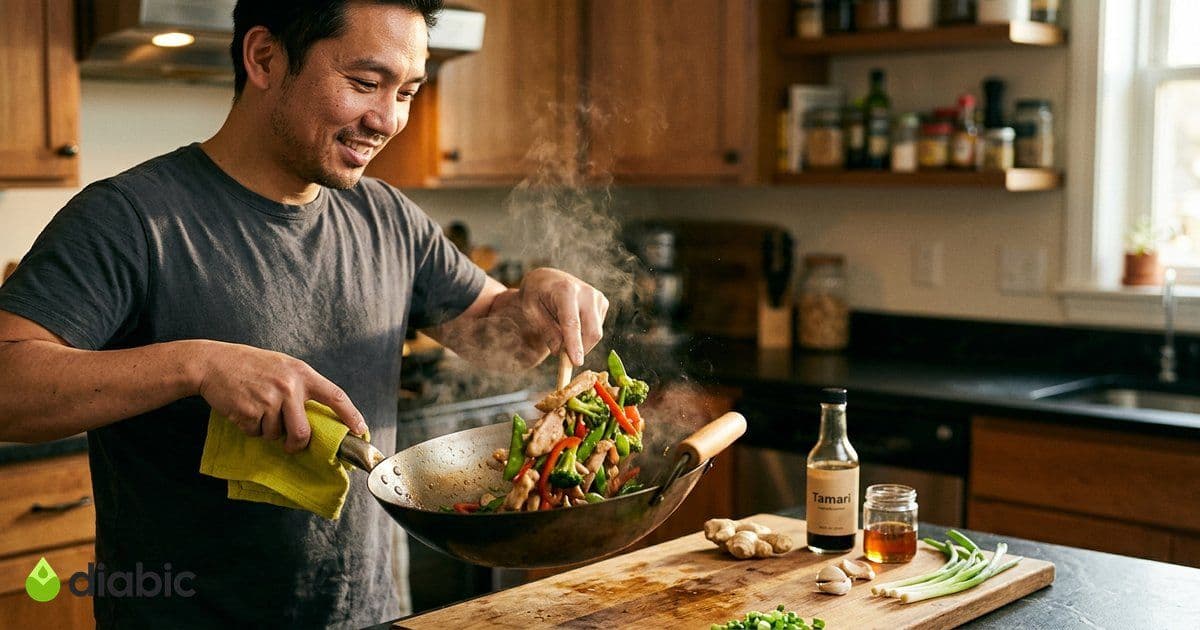
Asian diabetes recipes bring variety, bold flavor, and quick weeknight meals to your plate without the sugary sauces and mountains of white rice that make most takeout problematic. The flavors you love, ginger, garlic, sesame, scallion, soy, chili, do not have to leave the menu when you are managing blood sugar. They just need a little re-engineering.
The seven recipes below are written for real weeknights. Most cook in 20 minutes or less, use one pan, and pair well with cauliflower rice or a small portion of brown rice. Each one includes the carb, fiber, and protein context that matters for diabetes meal planning, plus the swaps that keep numbers steadier.
From my experience: The first time I watched my Dexcom G7 trace after a typical bowl of takeout sesame chicken, the line climbed past 240 mg/dL and just sat there, even with a stacked correction. Switching the home version to tamari, a pinch of monk fruit, and a half-cup of brown rice instead of two cups of white kept the curve well under 180 the next week with the exact same dose. Same dish, completely different graph, and that quiet flat line is the whole reason I started cooking these at home.
Making Asian Food Work for Diabetes
The blood sugar traps in Asian cuisine are not the cuisine itself. They are a handful of common ingredients and cooking methods that show up everywhere. White rice in 2-cup portions, sweet sauces built on sugar and cornstarch, deep-fried protein, and breading that hides under thick glazes. Once you know where the carbs hide, you can swap them out without losing the soul of the dish. For a deeper look at Chinese cooking specifically, our guide to Chinese recipes for diabetes covers takeout favorites and homemade versions side by side.
The good news is that Asian cooking is also full of diabetes-friendly building blocks. Stir-frying uses a small amount of oil and high heat, which preserves nutrients and cooks vegetables quickly. Steaming, grilling, and braising in broth are standard techniques across Chinese, Japanese, Korean, Thai, and Vietnamese kitchens. Vegetables are not a side dish, they are usually half the plate.
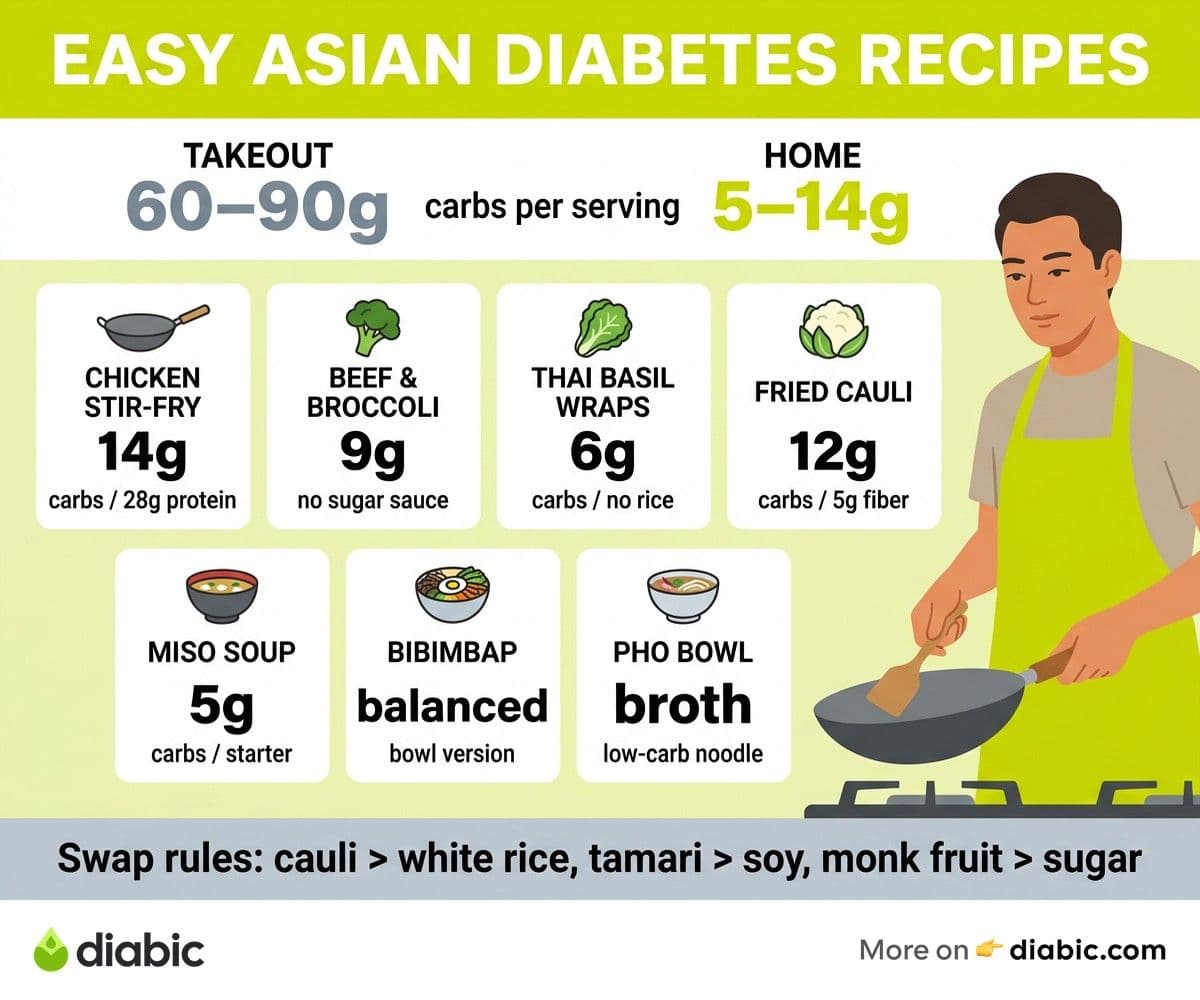
Smart swaps make a big difference. Cauliflower rice or konjac (shirataki) rice replaces white rice with a fraction of the carbs. Tamari or coconut aminos give you the soy flavor without the wheat and with less sodium. A teaspoon of stevia or monk fruit replaces the tablespoons of sugar in standard sauces. Arrowroot or a pinch of xanthan gum thickens sauces without the cornstarch slurry that spikes glucose.
Protein quality also matters. Chicken thigh, lean beef, shrimp, tofu, eggs, and white fish all work beautifully with Asian flavors. The American Diabetes Association's guidance on protein and meal planning supports building meals around lean protein and non-starchy vegetables, which is exactly what most stir-fries already do.
Easy Asian Diabetes Recipes
These recipes lean on ingredients you can find in most grocery stores. They are also a good place to start if you want diabetes-friendly dinner recipes that do not feel like diet food. Pair any of them with a small side of brown rice, cauliflower rice, or a simple cucumber salad.
1. Chicken and Vegetable Stir-Fry with Tamari
Slice 1 lb chicken thigh into strips and toss with a teaspoon of tamari and grated ginger. Heat 1 tablespoon avocado oil in a wok over high heat, sear the chicken in a single layer, then push it to the side. Add 2 cups broccoli florets, 1 sliced bell pepper, and 1 cup snap peas. Stir-fry 3 minutes, then return the chicken and finish with 2 tablespoons tamari, 1 teaspoon sesame oil, and a pinch of red pepper flakes. Serves 4.
Per serving: roughly 14g carbs, 4g fiber, 28g protein. Why it works: lean protein anchors the meal, the vegetables add fiber and volume, and tamari swaps in for high-sugar bottled stir-fry sauce. Diabetes chicken recipes do not get easier than this.
2. Beef and Broccoli (Low-Sugar)
Marinate 12 oz thinly sliced flank steak in 1 tablespoon tamari, 1 teaspoon rice vinegar, and 1 teaspoon grated ginger for 15 minutes. Steam 4 cups broccoli florets until just tender. Sear the beef in a hot pan with 1 tablespoon avocado oil, then add the broccoli, 2 tablespoons tamari, 1 teaspoon toasted sesame oil, and 1 teaspoon monk fruit sweetener. Toss for 1 minute and serve. Serves 4.
Per serving: roughly 9g carbs, 3g fiber, 26g protein. Why it works: the classic takeout version often has 30+ grams of sugar from the sauce. Monk fruit and tamari give you the same savory-sweet balance with almost none of the carb load.
3. Thai Basil Chicken Lettuce Wraps
Mince 1 lb chicken thigh and brown in 1 tablespoon avocado oil with 4 minced garlic cloves and 2 minced Thai chiles. Add 1 tablespoon tamari, 1 tablespoon fish sauce, 1 teaspoon monk fruit, and a splash of lime juice. Stir in a heaping cup of fresh Thai basil at the end. Spoon into butter lettuce leaves. Serves 4.
Per serving: roughly 6g carbs, 2g fiber, 24g protein. Why it works: lettuce leaves replace rice and noodles entirely, and the basil and lime keep the flavor bright without added sugar.
4. Vegetable Fried Cauliflower Rice
Pulse 1 large head of cauliflower into rice-sized pieces, or use 5 cups frozen riced cauliflower. Scramble 3 eggs in 1 tablespoon sesame oil and set aside. In the same pan, stir-fry 1 cup diced carrot, 1 cup peas, 3 sliced scallions, and 2 minced garlic cloves. Add the cauliflower rice, 2 tablespoons tamari, and the eggs back in. Cook 5 minutes until everything is hot and slightly crispy. Serves 4.
Per serving: roughly 12g carbs, 5g fiber, 9g protein. Why it works: a standard cup of fried rice runs 45g of carbs. Cauliflower drops that to a third while keeping the texture and the sesame-soy flavor.
5. Miso Soup with Tofu
Bring 4 cups dashi or low-sodium chicken broth to a gentle simmer. Whisk in 3 tablespoons white miso paste off the heat (boiling kills the live cultures). Add 6 oz cubed silken tofu, 2 cups baby spinach, and 2 sliced scallions. Heat 1 minute and serve. Serves 4.
Per serving: roughly 5g carbs, 1g fiber, 8g protein. Why it works: a warming starter or light meal that adds protein and probiotics without raising blood sugar. Pair with one of the heartier mains above for a complete dinner.
6. Korean-Style Grilled Chicken
Whisk 3 tablespoons tamari, 2 tablespoons rice vinegar, 1 tablespoon sesame oil, 1 tablespoon grated ginger, 4 minced garlic cloves, and 1 teaspoon monk fruit. Marinate 1.5 lb chicken thigh for at least 30 minutes (overnight is better). Grill or pan-sear over medium-high heat for 5 to 6 minutes per side. Serve with kimchi and a cucumber salad. Serves 4 to 6.
Per serving: roughly 4g carbs, 0g fiber, 32g protein. Why it works: the marinade carries the classic Korean barbecue flavor without the sugar that usually defines it. Kimchi adds gut-friendly fermentation and almost no carbs.
7. Ginger Garlic Shrimp with Bok Choy
Heat 1 tablespoon avocado oil and add 1 tablespoon grated ginger, 4 sliced garlic cloves, and a pinch of red pepper flakes. Add 1 lb peeled shrimp and cook 2 minutes. Add 4 baby bok choy heads, halved lengthwise, plus 2 tablespoons tamari and 1 tablespoon water. Cover for 2 minutes until the bok choy wilts. Serves 4. For more shellfish ideas, see our shrimp recipes for diabetes collection.
Per serving: roughly 7g carbs, 2g fiber, 24g protein. Why it works: shrimp cooks in minutes, bok choy adds fiber and minerals, and ginger has been studied for its modest effects on post-meal blood sugar response.
If you are looking for more globally inspired meals, our roundup of Mexican recipes for diabetes covers another cuisine that translates beautifully to diabetes-friendly cooking.
Tips for Ordering Asian Takeout with Diabetes
Cooking at home gives you the most control, but takeout happens. The ADA's guidance on eating out lays out the basic moves, and they translate well to Asian menus. The first rule is simple: choose steamed or stir-fried over deep-fried. Steamed dumplings, steamed fish, stir-fried greens, and grilled skewers all start in better territory than tempura, sweet and sour anything, or General Tso's.
Ask for sauce on the side. Most blood sugar damage from takeout comes from the sauce pooling on top of rice or coating breaded protein. With sauce on the side, you can use a spoonful for flavor without drowning the dish. This one habit can drop the sugar in a meal by 20 grams or more.
Swap white rice for steamed vegetables, brown rice, or skip the rice entirely if your bowl is already protein and vegetables. Sashimi and miso soup at a Japanese restaurant are reliably low-carb. Vietnamese pho without noodles, with extra bean sprouts and herbs, also works well. Korean grilled meats with kimchi, lettuce wraps, and a small portion of rice is one of the easier menus to navigate.
FAQ
What Asian food can people with diabetes eat?
Stir-fried proteins with vegetables, miso soup, sashimi, steamed fish, grilled meats, and lettuce wraps are all good starting points. Avoid deep-fried dishes, sweet glazes (sweet and sour, orange chicken, teriyaki with added sugar), and oversized portions of white rice. Brown rice, cauliflower rice, or extra vegetables work as substitutes.
Are stir-fry dishes good for people with diabetes?
Yes, stir-fries are one of the most diabetes-friendly cooking methods. They use small amounts of oil, cook vegetables quickly to retain nutrients, and naturally feature lean protein and non-starchy vegetables. Use tamari or coconut aminos instead of bottled stir-fry sauce, which often hides 10 or more grams of added sugar per serving.
Can I still eat rice with these meals?
A small portion (half a cup, about 22g of carbs) of brown rice, jasmine rice, or wild rice can fit if you account for it in your overall meal carbs. Many people with diabetes find cauliflower rice or shirataki rice a better fit for blood sugar, especially in the evening. Talk to your doctor or a registered dietitian about portion sizes that fit your plan.
What sauces are safe for diabetes?
Tamari, coconut aminos, rice vinegar, fish sauce, sesame oil, and chili oil are low-carb staples. Bottled teriyaki, sweet chili, hoisin, oyster sauce, and most stir-fry sauces have added sugar. Read labels and look for sauces with under 2 grams of sugar per tablespoon, or make your own with tamari and a pinch of monk fruit.
Asian flavors do not have to live on the takeout-only side of your meal plan. With a few smart swaps and a hot pan, dinner can be on the table in 20 minutes and your blood sugar can stay where you want it. Build a short rotation of Asian diabetes recipes you can cook half-asleep, and the weeknight question of what is for dinner gets a lot quieter.
Shahriar P. Shuvo is the founder of Diabic. He has lived with diabetes for over 14 years, and built Diabic to deliver the practical, evidence-based self-management tools he wished existed when he was first diagnosed. By trade, Shahriar is a senior design and frontend engineer with 6+ years shipping products at Agora, Timescale (now Tiger Data), and ShareTrip. He writes from the intersection of lived diabetes experience and product craft, focused on what works in daily management rather than what sounds good in a textbook.
Medically reviewed by
Dr. Shanto Arian is an internal medicine physician now specializing in clinical and aesthetic dermatology, with a parallel academic focus on epidemiology and public health. He holds an MBBS, MPH, MSc (UK), MRCP (UK), MRCPI (Ireland), Diploma in Dermatology (UK), and Diploma in Aesthetic Medicine (USA). Dr. Arian trained in internal medicine, including hospital work on hematology cases such as graft-versus-host disease, before moving toward dermatology. Skin is one of the earliest places diabetes shows itself, from acanthosis nigricans and diabetic dermopathy to slow foot wound healing, and that intersection is where his clinical and Diabic-review work meet. On Diabic, Dr. Arian medically reviews content on diabetes diagnosis, complications, dermatologic manifestations, and pharmacotherapy, ensuring every claim aligns with current ADA, NICE, and peer-reviewed literature.
More from Diet & Fitness
View all
7 Sweet Potato Diabetes Recipes That Keep Blood Sugar Steady
Seven sweet potato diabetes recipes with balanced macros, plus the cooking methods and portion tips that keep this naturally sweet vegetable blood-sugar.

Diabetes Pasta Recipes That Won't Spike Blood Sugar
Five diabetes pasta recipes that keep blood sugar steady, plus the cooking trick and pasta swaps that lower glycemic impact for everyday meals.
Chinese Recipes for Diabetes That Taste Like Takeout
Chinese recipes for diabetes that recreate takeout favorites at home with low-sugar swaps, controlled portions, and stir-fries that keep blood sugar.
Clinician-reviewed habits, plain-language guides, and honest answers - the small shifts that make living with diabetes feel lighter, every day.