6 Diabetes-Friendly Shrimp Recipes for Quick Weeknight
Six fast, protein-packed diabetes shrimp recipes that come together in 30 minutes. Includes nutrition notes, cooking tips, and pairings for steady blood.
In this article(14)
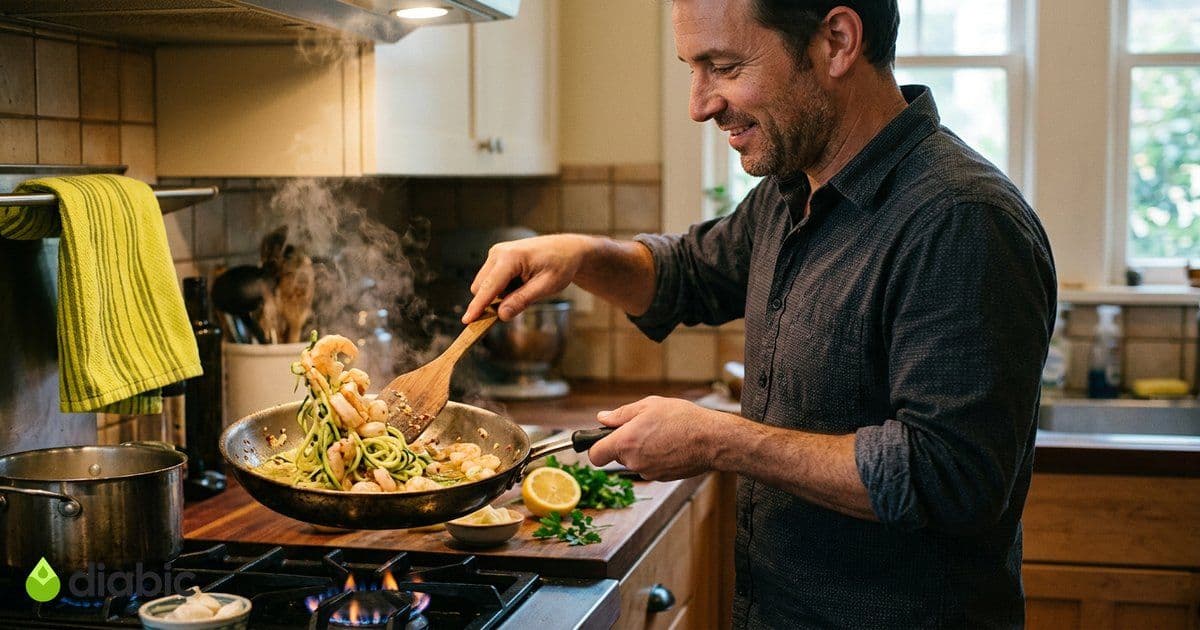
When you need dinner on the table in under thirty minutes and you want something that will not send your glucose climbing, shrimp is hard to beat. Diabetes shrimp recipes work because shrimp itself is almost pure protein, cooks in three to four minutes, and pairs with just about any vegetable in your fridge. There is a reason it shows up so often in our community meal plans.
We rounded up six of our favorite shrimp dinners that hit different cravings, from garlic butter to coconut curry. Each recipe is built around real-life weeknight constraints, which means short ingredient lists, one or two pans, and pairings that keep the carb count balanced.
Why Shrimp Works for a person with diabetes Diet
Shrimp delivers about 24 grams of protein per 4-ounce serving with zero carbs and only 1 gram of fat, according to USDA nutrition data. That makes it one of the most blood-sugar-friendly proteins on the menu. The American Diabetes Association lists shrimp and other seafood as recommended protein choices for people with diabetes, especially when grilled, baked, or sauteed rather than breaded and fried.
Beyond the protein, shrimp brings selenium, vitamin B12, and a modest amount of omega-3 fatty acids. Omega-3s have been studied for their role in supporting heart health, which matters because cardiovascular disease is a leading concern for people managing diabetes. The American Heart Association's guidance on fish and omega-3 fatty acids summarizes the evidence and recommends two seafood meals a week. If you want to expand your seafood rotation, our roundup of fish recipes for diabetes covers salmon, cod, tuna, and other options that pair well with the same sides.
The third reason shrimp works so well is versatility. It carries Mediterranean flavors, Asian stir-fries, Cajun seasoning, and Indian curry equally well, which helps keep weeknight dinners from feeling repetitive. If you are exploring a longer-term eating pattern, our guide to the Mediterranean diet for diabetes shows how shrimp fits naturally into one of the most-studied diets for blood sugar management.
6 Diabetes-Friendly Shrimp Recipes
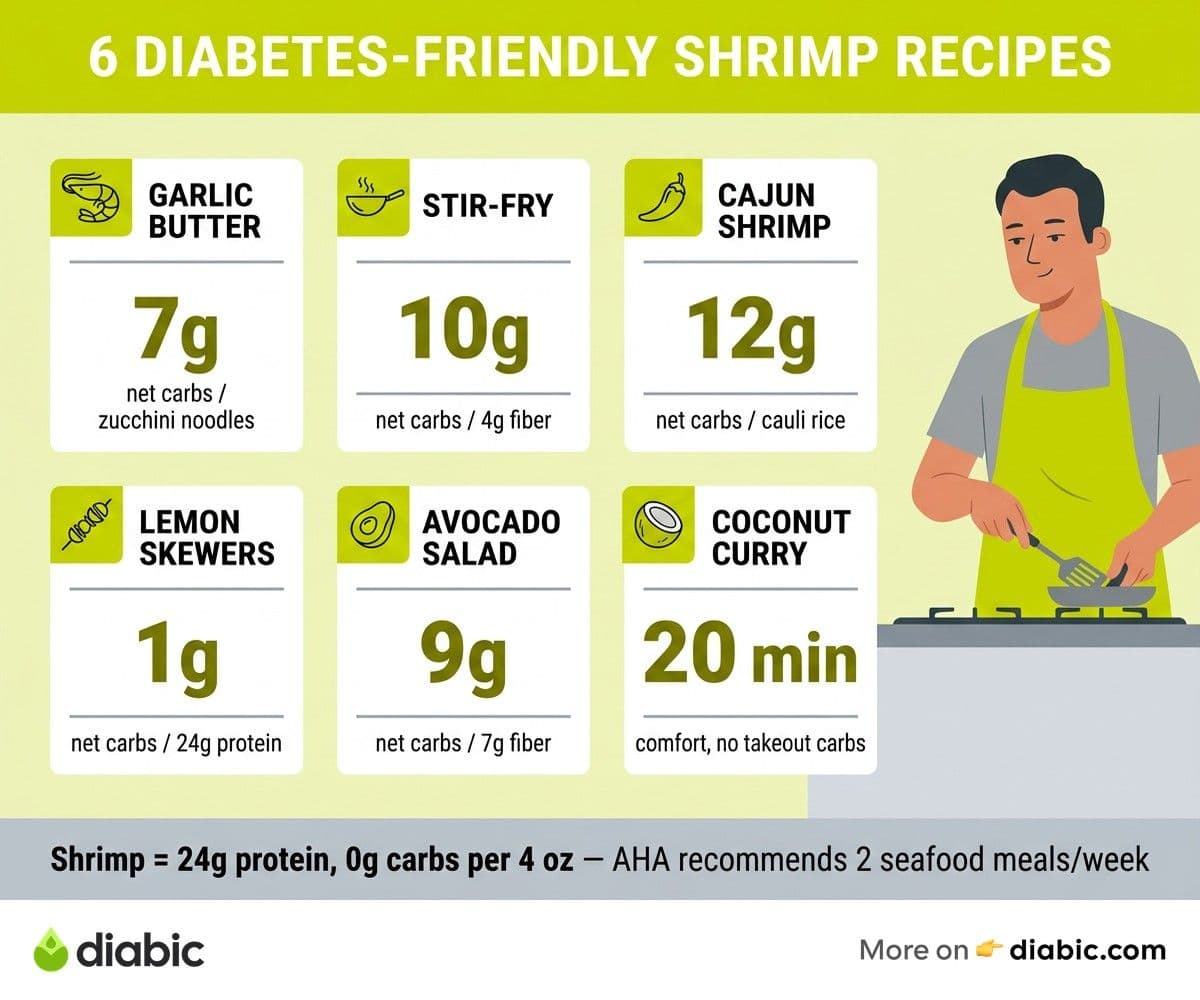
These six diabetes-friendly dinner recipes share the same playbook: lean protein, non-starchy vegetables, healthy fats, and small or no portions of refined carbs. Each yields about four servings.
1. Garlic Butter Shrimp with Zucchini Noodles
A 15-minute dinner that tastes far richer than its carb count suggests. Spiralized zucchini stands in for pasta and soaks up the buttery garlic sauce.
Ingredients: 1 pound peeled shrimp, 4 medium zucchini (spiralized), 3 tablespoons butter, 4 garlic cloves (minced), juice of 1 lemon, 1/2 teaspoon red pepper flakes, salt, parsley.
Instructions: Melt butter in a skillet, add garlic, and cook 30 seconds. Add shrimp and cook 2 minutes per side until pink. Stir in zucchini noodles and cook 2 more minutes. Finish with lemon juice and parsley.
Per serving: about 240 calories, 7g net carbs, 2g fiber, 26g protein. The combination of high protein and very low carbs makes this one of the most blood-sugar-stable dinners in the lineup.
2. Shrimp Stir-Fry with Vegetables
A weeknight standby that uses whatever vegetables you have on hand. The trick is keeping the sauce light on sugar.
Ingredients: 1 pound shrimp, 2 cups broccoli florets, 1 red bell pepper (sliced), 1 cup snap peas, 2 tablespoons low-sodium soy sauce or tamari, 1 tablespoon rice vinegar, 1 teaspoon sesame oil, 1 tablespoon grated ginger, 2 cloves garlic.
Instructions: Heat sesame oil in a wok. Stir-fry vegetables 4 minutes. Add ginger, garlic, shrimp, soy sauce, and vinegar. Cook 3 minutes until shrimp are pink. Serve over a half-cup of cauliflower rice.
Per serving: about 220 calories, 10g net carbs, 4g fiber, 27g protein. Skip the bottled stir-fry sauces, which often contain 8 to 12 grams of added sugar per tablespoon.
3. Cajun Shrimp and Cauliflower Rice
A bold, spicy bowl that scratches the same itch as jambalaya without the rice load.
Ingredients: 1 pound shrimp, 4 cups riced cauliflower, 1 onion (diced), 1 green bell pepper (diced), 2 stalks celery (diced), 2 tablespoons olive oil, 2 teaspoons Cajun seasoning, 1 can diced tomatoes (no sugar added).
Instructions: Saute onion, pepper, and celery in olive oil 5 minutes. Add Cajun seasoning, tomatoes, and cauliflower rice. Simmer 8 minutes. Add shrimp and cook 3 more minutes.
Per serving: about 260 calories, 12g net carbs, 5g fiber, 28g protein. Cauliflower rice keeps the carb count under control while the bell pepper and tomatoes deliver vitamin C and antioxidants.
4. Lemon Herb Grilled Shrimp Skewers
These work on a grill, a grill pan, or under the broiler. Marinate ahead, cook in five minutes, and serve over a salad.
Ingredients: 1 pound jumbo shrimp, 3 tablespoons olive oil, juice and zest of 1 lemon, 2 cloves garlic, 1 tablespoon chopped fresh herbs (parsley, oregano, or dill), salt, pepper.
Instructions: Whisk marinade, toss with shrimp, marinate 15 minutes. Thread onto skewers. Grill 2 to 3 minutes per side.
Per serving: about 200 calories, 1g net carbs, 0g fiber, 24g protein. Pair with a Greek salad or roasted vegetables for a nearly carb-free meal.
5. Shrimp and Avocado Salad
A no-cook option for hot days or busy weeknights. Cooked shrimp from the seafood counter shaves off another ten minutes.
Ingredients: 1 pound cooked shrimp, 2 avocados (diced), 1 cucumber (diced), 1 cup cherry tomatoes (halved), 1/4 red onion (thinly sliced), 3 tablespoons olive oil, 2 tablespoons lime juice, cilantro, salt.
Instructions: Combine all ingredients in a large bowl. Toss gently to keep avocado intact. Serve immediately.
Per serving: about 320 calories, 9g net carbs, 7g fiber, 25g protein. The fiber from avocado and the healthy fats from olive oil make this one of the most filling options in the group.
6. Coconut Curry Shrimp
When you want comfort food without the takeout-menu carbs. The curry comes together in about 20 minutes.
Ingredients: 1 pound shrimp, 1 can light coconut milk, 2 tablespoons red curry paste, 1 tablespoon fish sauce, 1 cup spinach, 1 red bell pepper (sliced), 1 tablespoon grated ginger, juice of 1 lime.
Instructions: Simmer coconut milk, curry paste, and fish sauce 3 minutes. Add bell pepper and ginger, cook 4 minutes. Add shrimp and spinach, cook 3 minutes until shrimp are pink. Finish with lime juice.
Per serving: about 290 calories, 9g net carbs, 2g fiber, 25g protein. Serve over a small portion of cauliflower rice to soak up the sauce. For more no-fuss weeknight ideas, our dinner recipes for diabetes collection has additional options.
Cooking Tips for Diabetes-Friendly Shrimp Meals
The biggest mistake we see with shrimp is breading and deep-frying it, which transforms a near-zero-carb protein into a carb-heavy meal with 25 to 35 grams of carbs per serving and a much higher saturated fat load. Coconut shrimp from a restaurant menu often clears 1,000 calories. The same shrimp, grilled with lemon and herbs, runs about 200.
Pair shrimp with non-starchy vegetables to fill the plate without raising blood sugar much. Broccoli, zucchini, bell peppers, leafy greens, asparagus, and cauliflower all work. If you want a starch alongside, choose a small portion of brown rice, quinoa, or whole-grain pasta and measure it out. The plate method, half non-starchy vegetables, a quarter protein, and a quarter carbs, applies cleanly here.
From my experience: Living with diabetes for 14 years has taught me that shrimp is the protein I never have to think twice about. When my CGM has been bouncy all day, I default to a shrimp stir-fry or a quick scampi with zucchini noodles, and my numbers settle by bedtime. It is not magic. It is just protein and vegetables doing what they are supposed to do.
For flavor without carbs, lean on olive oil, garlic, citrus, fresh herbs, smoked paprika, cumin, and chili flakes. These are the same flavor builders you would find in many diabetes friendly chicken recipes, which is part of why a shrimp dinner does not have to feel like a downgrade. Shrimp also takes well to a quick brine (10 minutes in salted water) before cooking, which keeps it juicy and hard to overcook.
Frequently Asked Questions About Diabetes Shrimp Recipes
Is shrimp good for people with diabetes to eat?
Yes, shrimp is an excellent protein choice for someone managing diabetes. It contains zero carbohydrates, about 24 grams of protein per 4-ounce serving, and provides selenium, B12, and omega-3 fatty acids. The healthiest preparations are grilled, sauteed, baked, or boiled rather than breaded and fried. Shrimp does contain dietary cholesterol, but research suggests dietary cholesterol has less impact on blood cholesterol than once thought. Talk to your doctor if you have concerns about cholesterol intake.
How do I cook shrimp for a diabetes-friendly meal?
Cook shrimp quickly over medium-high heat with olive oil or butter, garlic, herbs, and citrus. Most shrimp cook in 3 to 5 minutes total. Pair them with non-starchy vegetables, a salad, or cauliflower rice for a balanced plate. Avoid breading, deep-frying, or sugary marinades and bottled sauces, which can add 10 to 30 grams of carbs per serving.
How much shrimp can I eat in a sitting?
A typical serving is 4 to 6 ounces (about 12 to 18 medium shrimp), which delivers 24 to 36 grams of protein. People with diabetes who are also watching cholesterol may want to keep portions to 4 ounces and limit shrimp meals to two or three times per week. Your registered dietitian can help fine-tune the right amount for your plan.
Can I use frozen shrimp in these recipes?
Absolutely. Most shrimp in U.S. grocery stores has been frozen at sea, even the shrimp at the seafood counter. Thaw frozen shrimp under cold running water for 5 minutes or in the fridge overnight. Pat dry before cooking so they sear instead of steam.
Six recipes is enough to cover a couple of weeks without repeating yourself. Keep a bag of frozen shrimp in the freezer, a few aromatics on hand, and you have a diabetes-friendly dinner anytime you need one. The diabetes shrimp recipes that earn permanent spots in your rotation will be the ones you can cook without thinking, and most of these qualify after a single try.
Shahriar P. Shuvo is the founder of Diabic. He has lived with diabetes for over 14 years, and built Diabic to deliver the practical, evidence-based self-management tools he wished existed when he was first diagnosed. By trade, Shahriar is a senior design and frontend engineer with 6+ years shipping products at Agora, Timescale (now Tiger Data), and ShareTrip. He writes from the intersection of lived diabetes experience and product craft, focused on what works in daily management rather than what sounds good in a textbook.
Medically reviewed by
Dr. Shanto Arian is an internal medicine physician now specializing in clinical and aesthetic dermatology, with a parallel academic focus on epidemiology and public health. He holds an MBBS, MPH, MSc (UK), MRCP (UK), MRCPI (Ireland), Diploma in Dermatology (UK), and Diploma in Aesthetic Medicine (USA). Dr. Arian trained in internal medicine, including hospital work on hematology cases such as graft-versus-host disease, before moving toward dermatology. Skin is one of the earliest places diabetes shows itself, from acanthosis nigricans and diabetic dermopathy to slow foot wound healing, and that intersection is where his clinical and Diabic-review work meet. On Diabic, Dr. Arian medically reviews content on diabetes diagnosis, complications, dermatologic manifestations, and pharmacotherapy, ensuring every claim aligns with current ADA, NICE, and peer-reviewed literature.
More from Diet & Fitness
View all
7 Sweet Potato Diabetes Recipes That Keep Blood Sugar Steady
Seven sweet potato diabetes recipes with balanced macros, plus the cooking methods and portion tips that keep this naturally sweet vegetable blood-sugar.

Diabetes Pasta Recipes That Won't Spike Blood Sugar
Five diabetes pasta recipes that keep blood sugar steady, plus the cooking trick and pasta swaps that lower glycemic impact for everyday meals.
Chinese Recipes for Diabetes That Taste Like Takeout
Chinese recipes for diabetes that recreate takeout favorites at home with low-sugar swaps, controlled portions, and stir-fries that keep blood sugar.
Clinician-reviewed habits, plain-language guides, and honest answers - the small shifts that make living with diabetes feel lighter, every day.