Can a High-Fiber Diet Help Manage Diabetes
A high-fiber diet for diabetes can steady blood sugar, lower A1C, and improve insulin sensitivity. Here is what to eat, how much you need, and where to.

In this article(10)
A high-fiber diet diabetes plan rarely starts with a dramatic overhaul. It usually starts with squinting at a nutrition label, wondering whether 4 grams of fiber is "good" or barely worth counting. If you have done that, you are not alone. Most adults in the United States get only about 15 grams of fiber a day, which is roughly half of what current guidelines suggest. For someone managing blood sugar, the gap shows up at almost every meal.
A high-fiber diet diabetes approach is one of the most consistently studied lifestyle strategies for steadier glucose, healthier cholesterol, and better long-term outcomes. Fiber is not a magic ingredient, but it does change how your body handles meals in ways that show up on your glucose meter and your lab results. Below, we walk through how it works, which foods carry the most weight, and how to add fiber without your stomach staging a protest.
How a High-Fiber Diet Diabetes Plan Affects Blood Sugar
Fiber is the part of plant foods your body cannot fully digest. Because it passes through your gut largely intact, it slows down how quickly other nutrients, including carbohydrates, get absorbed into your bloodstream. That single mechanism is the reason a high fiber diet and diabetes management have such a strong, well-documented link.
There are two main types of fiber, and they each play different roles. Soluble fiber dissolves in water and forms a thick, gel-like substance in your digestive tract. Insoluble fiber does not dissolve and adds bulk that helps food move through the gut.
For blood sugar specifically, soluble fiber does most of the heavy lifting. Foods like oats, beans, apples, and chia seeds form that gel and slow the release of glucose into your blood after a meal. The result is a gentler post-meal rise instead of a sharp spike.
Research backs this up. A large meta-analysis published in The Lancet found that people who ate the most fiber had a 15 to 30 percent lower risk of dying from diabetes-related causes compared with those who ate the least. Other trials show that adding 10 to 20 grams of soluble fiber a day can reduce A1C by a meaningful margin, especially for people with type 2 diabetes.
Pairing fiber with low glycemic foods for diabetes tends to amplify the effect. The two strategies work on the same problem from slightly different angles, which is why dietitians often recommend them together.
High-Fiber Foods Every Person With Diabetes Should Know
You do not need to memorize a chart to eat more fiber. A short mental list of categories, with two or three favorites in each, will cover most of your meals. Here are the food groups worth keeping on your weekly rotation.
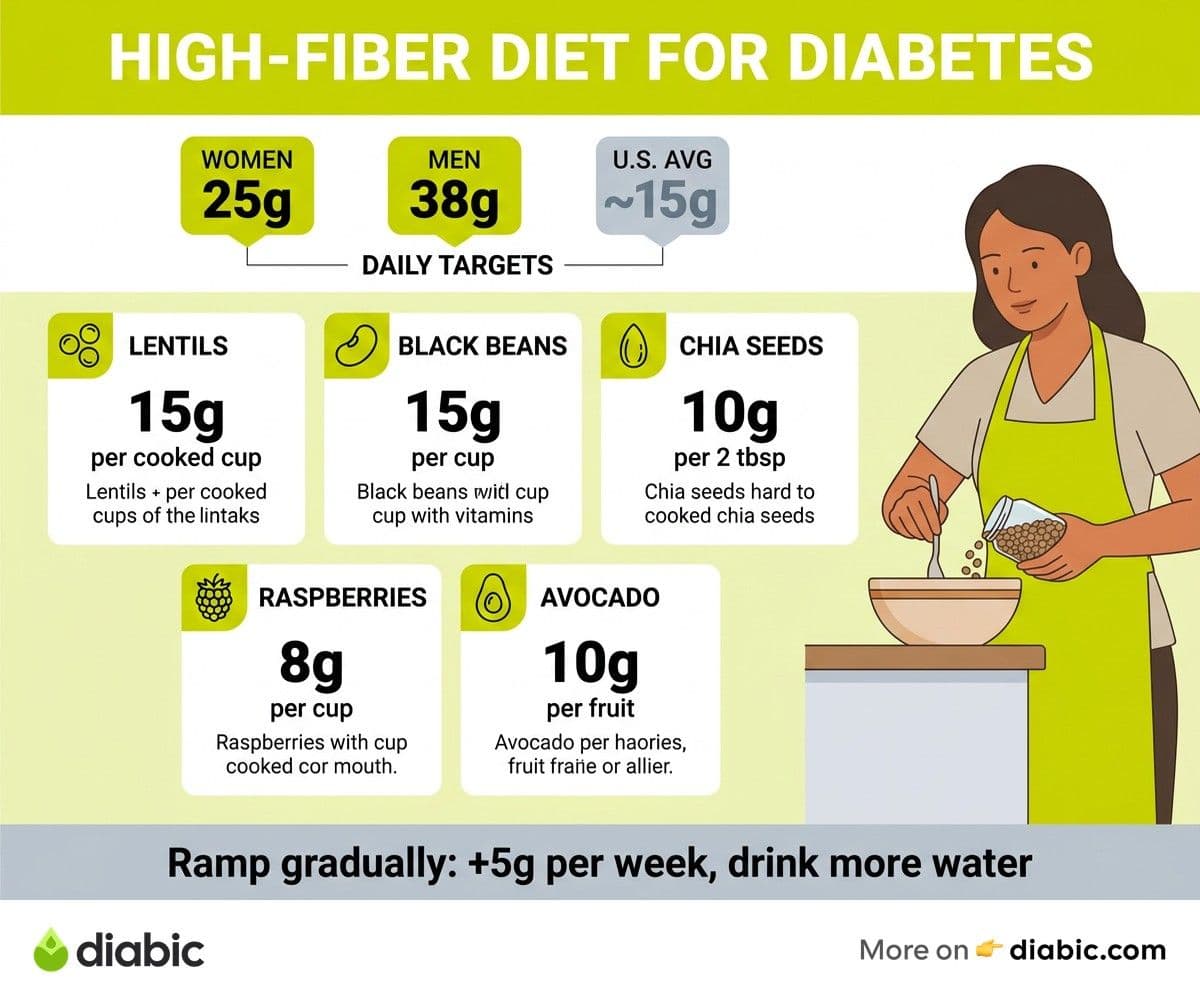
Legumes are arguably the single best fiber source in the average grocery store. A cup of cooked lentils delivers around 15 grams of fiber, black beans about 15 grams, and chickpeas roughly 12 grams. They also bring plant protein, which further softens blood sugar response.
Non-starchy vegetables are another reliable group. Artichokes lead the pack at about 7 grams per medium artichoke, but broccoli, Brussels sprouts, carrots, and dark leafy greens all add up quickly when you eat them daily. The bonus is that you can eat large volumes for very few calories.
Fruits sometimes get an unfair reputation in diabetes circles. Whole fruit, eaten with the skin where appropriate, brings fiber along with the natural sugar, which is exactly what slows the glucose response. Raspberries (8 grams per cup), pears (5 to 6 grams each), avocado (10 grams per fruit), and apples are all strong choices.
Whole grains include oats, barley, quinoa, farro, and bulgur. We cover this group in more depth in our guide to whole grains for prediabetes, but the same principles apply once you have a diabetes diagnosis. The grain still has its bran, germ, and endosperm intact, which is what carries the fiber and most of the nutrients.
Seeds and nuts punch above their weight. Two tablespoons of chia seeds give you about 10 grams of fiber, ground flaxseeds add roughly 4 grams in the same amount, and a small handful of almonds chips in another 3 to 4 grams. The Mayo Clinic keeps a useful reference list if you want to compare specific foods.
A healthy diet for people with diabetes does not require any one of these foods. It just needs a steady mix from across the categories so that fiber shows up at most meals.
How Much Fiber Do You Actually Need
Current guidance is straightforward, even if hitting the number takes some practice. The American Diabetes Association and the Dietary Guidelines for Americans both recommend at least 25 grams of fiber a day for women and 38 grams a day for men, with some sources rounding both targets to 25 to 30 grams as a practical floor.
People with diabetes may benefit from the higher end of that range. Some research suggests that intakes closer to 35 to 50 grams a day produce the strongest improvements in A1C and cholesterol, although the trade-off is more digestive discomfort while your gut adjusts.
Here is the catch. Most adults in the U.S. and U.K. fall well short of even the lower target. So if you are currently eating around 15 grams a day, doubling that overnight is a recipe for bloating, gas, and the unpleasant kind of "regularity."
The fix is to ramp up gradually, adding about 5 grams a day for a week at a time, and to drink more water as you go. Fiber needs water to do its job. Without enough fluid, more fiber can actually slow things down rather than help.
A quick way to gauge progress is to read labels and aim for foods that deliver at least 3 grams of fiber per serving. For deeper guidance on building this habit before a diagnosis, our roundup of high fiber foods for prediabetes is a useful starting point.
Easy Ways to Add More Fiber to Your Meals
Reaching 25 to 35 grams a day sounds like a lot until you realize it is mostly a matter of small swaps repeated across the week. A balanced diet for diabetes does not need to be elaborate. It just needs more plants in places where refined carbs usually sit.
Try these substitutions and additions over the next few weeks:
- Swap white rice for barley, farro, or a half-and-half blend with cauliflower rice. You will roughly triple the fiber per cup.
- Stir half a cup of black beans, lentils, or chickpeas into soups, salads, chili, and grain bowls. This single habit can add 6 to 8 grams of fiber per meal.
- Choose whole fruit instead of juice. An orange has about 3 grams of fiber. A cup of orange juice has almost none and a much faster glucose response.
- Sprinkle a tablespoon of chia or ground flaxseed onto Greek yogurt, oatmeal, or smoothies. Both blend in without changing the flavor much.
- Keep the skin on apples, pears, potatoes, and cucumbers when the recipe allows. Most of the fiber lives in or just under the peel.
Soups and stews are an especially efficient delivery system because you can pack in legumes and vegetables without a lot of fuss. Our collection of diabetes soup recipes shows how to build them around fiber-rich staples without losing flavor.
From my experience: I have lived with diabetes for 14 years, and the change that quietly moved my numbers more than any other was adding a cup of beans or lentils to lunch most days. It is not glamorous, and it will not show up in a marketing brochure, but my post-lunch readings dropped within a couple of weeks once it became a habit.
When High Fiber Might Not Be Enough on Its Own
Fiber is powerful, but it is not a standalone treatment. A high-fiber diet diabetes plan works best when it sits alongside the other levers that affect blood sugar.
Pairing fiber with protein and healthy fats at the same meal tends to flatten glucose curves further. A bowl of oatmeal alone may still cause a noticeable rise. The same oatmeal topped with almonds, chia seeds, and Greek yogurt is a much steadier meal.
Other lifestyle factors also matter. Movement after meals, even a 10-minute walk, can lower post-meal glucose. Sleep quality and stress affect insulin sensitivity in ways that no amount of fiber can fully offset. Medication adjustments, when needed, should always be made with your healthcare team rather than improvised at home.
If you have made fiber changes for several weeks and your blood sugar trends are not budging, that is useful information to bring to your next appointment. It does not mean fiber is not working. It usually means the picture is more layered than diet alone, and your provider can help you sort out the next step.
FAQ
How does fiber help manage blood sugar in diabetes?
Soluble fiber forms a gel-like substance in your digestive tract that slows the absorption of sugar into your bloodstream. This helps prevent sharp post-meal spikes and supports more stable readings throughout the day. Over time, consistent high-fiber eating may also improve A1C and insulin sensitivity.
What high-fiber foods should people with diabetes eat?
Focus on legumes (lentils, black beans, chickpeas), non-starchy vegetables (broccoli, artichokes, leafy greens), whole grains (oats, barley, quinoa), berries, pears, avocado, and seeds like chia and flax. These foods provide significant fiber along with vitamins, minerals, and protein that round out a healthy diet for people with diabetes.
How much fiber should someone with diabetes eat per day?
Most guidelines recommend 25 to 30 grams a day at minimum, with some research suggesting 35 to 50 grams may bring stronger benefits for A1C and cholesterol. Increase fiber gradually by about 5 grams a week and drink plenty of water to avoid digestive discomfort.
Can a high-fiber diet replace diabetes medication?
No. A high-fiber diet diabetes plan may help reduce blood sugar and, in some cases, your provider may adjust medication as your numbers improve. Never stop or change medication on your own. Talk to your doctor about how dietary changes fit into your overall plan.
A high-fiber diet diabetes plan is rarely the whole answer, but it is one of the few changes that pays you back at almost every meal. The research on a high-fiber diet diabetes routine keeps pointing in the same direction: steadier post-meal numbers, gradual A1C improvement, and a healthier cholesterol panel over months rather than days. Start with one small swap this week, give your gut time to adjust, and watch what your numbers do over the next month.
Shahriar P. Shuvo is the founder of Diabic. He has lived with diabetes for over 14 years, and built Diabic to deliver the practical, evidence-based self-management tools he wished existed when he was first diagnosed. By trade, Shahriar is a senior design and frontend engineer with 6+ years shipping products at Agora, Timescale (now Tiger Data), and ShareTrip. He writes from the intersection of lived diabetes experience and product craft, focused on what works in daily management rather than what sounds good in a textbook.
Medically reviewed by
Dr. Rezwana Parvin Rumpa is an obstetrics and gynaecology specialist with clinical focus on gestational diabetes, PCOS, and fertility. She holds the MRCOG (Final Part) from the Royal College of Obstetricians and Gynaecologists in London, the MRCPI (Final Part) from the Royal College of Physicians of Ireland, and an MBBS from Shaheed Monsur Ali Medical College under Dhaka University. Dr. Rumpa serves as a Senior Medical Officer in the Obs and Gynae department at BRB Hospitals Ltd, where she has spent three years managing prenatal care, emergency obstetric cases, and women's-health surgery. On Diabic, she medically reviews content for women living with diabetes, with particular attention to pregnancy, PCOS, and reproductive-health intersections.
More from Diet & Fitness
View all
7 Sweet Potato Diabetes Recipes That Keep Blood Sugar Steady
Seven sweet potato diabetes recipes with balanced macros, plus the cooking methods and portion tips that keep this naturally sweet vegetable blood-sugar.

Diabetes Pasta Recipes That Won't Spike Blood Sugar
Five diabetes pasta recipes that keep blood sugar steady, plus the cooking trick and pasta swaps that lower glycemic impact for everyday meals.

Chinese Recipes for Diabetes That Taste Like Takeout
Chinese recipes for diabetes that recreate takeout favorites at home with low-sugar swaps, controlled portions, and stir-fries that keep blood sugar.
Clinician-reviewed habits, plain-language guides, and honest answers - the small shifts that make living with diabetes feel lighter, every day.