Diabetes Plate Method: A Simple Way to Eat Well
The diabetes plate method makes balanced meals simple. Learn how to use a 9-inch plate to manage blood sugar without counting carbs or weighing food.

In this article(7)
The diabetes plate method is one of the simplest tools for building balanced meals, and you do not need a nutrition degree to use it. If counting carbs or tracking macros has ever felt exhausting, this visual approach lets you eat well with nothing more than a standard dinner plate and a few minutes of attention.
It is also one of the few eating frameworks that works across cuisines, cooking styles, and life stages. The same plate logic that fits a quiet Tuesday dinner at home also fits a holiday spread, a takeout container, or a meal at your in-laws' house. That kind of flexibility is what makes a tool actually useful long-term.
How the Diabetes Plate Method Works
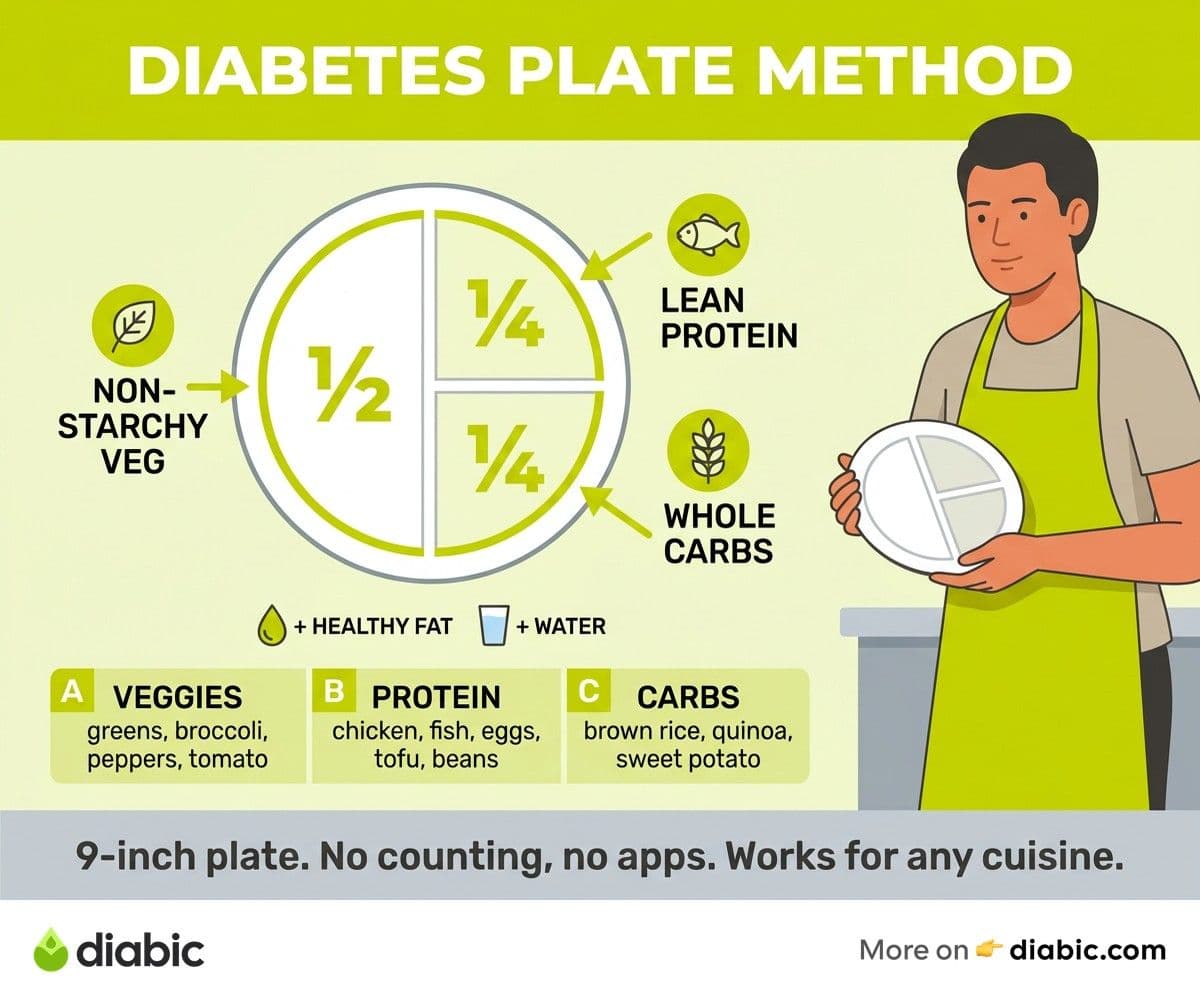
This approach, developed and promoted by the American Diabetes Association, uses a 9-inch plate as a built-in portion guide. You divide the plate into three sections, fill each one according to a simple ratio, and add a glass of water or another zero-calorie drink. That is the entire system.
Half of your plate goes to non-starchy vegetables. One quarter goes to lean protein. The last quarter goes to carbohydrate foods. The plate naturally limits portions of the foods that drive the biggest blood sugar swings while making room for the fiber, protein, and nutrients that keep you full and steady.
This approach works because it sidesteps math without sacrificing structure. You are not counting grams or scanning labels at the table. You are looking at your plate and asking a single question: are the proportions right? If they are, you have built a diabetes friendly diet meal without any spreadsheets. For a deeper look at the principles behind it, see our healthy diet rules for type 2 diabetes.
A quick note on plate size. The 9-inch dimension matters. Modern dinner plates are often 11 or 12 inches across, which can quietly add hundreds of calories and significantly more carbs to a meal that looks identical to one served on a smaller plate. If your plates are oversized, consider switching to a salad plate as your main plate.
Best Foods for Each Section of the Plate
The half-plate of non-starchy vegetables is where most people have the most room to grow. Strong choices include salad greens, spinach, kale, broccoli, cauliflower, green beans, peppers, tomatoes, cucumbers, zucchini, mushrooms, asparagus, and Brussels sprouts. Variety matters more than picking any one "superfood." Aim for color across the week.
The protein quarter covers a wide range of options. Chicken, turkey, fish, eggs, tofu, tempeh, edamame, and beans all qualify. Lean cuts and minimally processed options are preferred, though convenience matters too. Canned tuna, rotisserie chicken, and frozen salmon fillets are all reasonable when life is busy.
The carb quarter is where the type matters most. Whole grains like brown rice, quinoa, barley, and whole-wheat bread sit at the top of the list. Starchy vegetables (sweet potatoes, corn, peas) and legumes (lentils, chickpeas, black beans) work well too. Fruit can fill the carb section at breakfast or fit alongside it at other meals. The Centers for Disease Control and Prevention supports this kind of whole-food carb selection for steadier blood sugar.
Healthy fats are the small but important addition that makes meals satisfying. A drizzle of olive oil over the vegetables, half an avocado on top of a salad, a sprinkle of nuts or seeds, or a tablespoon of nut butter alongside fruit all contribute to slower digestion and better satiety. If you want to think more about the glycemic impact of specific foods, our piece on low glycemic diet for diabetes is a useful companion.
Putting the Plate Method into Practice for Different Meals
Breakfast is where the plate method needs the most adaptation, since most people do not eat dinner-style plates in the morning. The principles still apply. Half the meal can be non-starchy vegetables (spinach in scrambled eggs, peppers in an omelet, tomato slices on the side). A quarter is protein (eggs, Greek yogurt, cottage cheese). A quarter is whole carbs (oats, whole-grain toast, fruit). Add a healthy fat and water or coffee.
Lunch and dinner are the most natural fit. A standard plate with grilled chicken, roasted broccoli and cauliflower, and a small portion of quinoa hits every section. So does a fish fillet with a big mixed salad and half a baked sweet potato. The structure is forgiving. Swap proteins, vegetables, and grains based on what is in your fridge.
Bowls, soups, wraps, and one-pot meals do not fit the plate visual neatly, but the ratios still work. Mentally divide the bowl: half should look like vegetables, a quarter like protein, a quarter like carbs. A grain bowl with greens, chickpeas, roasted vegetables, and a drizzle of tahini follows the rule. So does a soup with lots of vegetables, beans, and a small portion of pasta or rice. For specific weeknight ideas, our roundup of dinner recipes for busy nights gives you starting points.
The order in which you eat the food on the plate can also matter. Some research suggests that eating vegetables and protein before carbs may produce a flatter post-meal blood sugar response. Our article on the best order to eat food for blood sugar covers what the evidence actually shows.
Plate Method vs. Carb Counting: Which Is Better
Both approaches have a place, and the right answer depends on what kind of management you are doing. The plate method works best for simplicity, beginners, type 2 diabetes managed without insulin, and anyone who finds tracking exhausting. It builds steady habits without ongoing math, and it tends to produce better long-term adherence because it asks less of you each day.
Carb counting may be more precise for people on insulin, especially those using mealtime insulin where dose accuracy matters. The Mayo Clinic notes that carb counting is often paired with insulin dosing because the relationship between carbs eaten and insulin needed is direct and trackable. People aiming for very tight A1C targets sometimes find counting necessary at certain meals.
You can absolutely use both approaches together. The plate method gives you the daily structure. Carb counting steps in for specific situations: a holiday meal you want to navigate carefully, a new food you are unsure about, or any meal where insulin dosing needs precision. Most experienced people with diabetes drift toward this combined approach over time without consciously planning it.
From my experience: After fourteen years with diabetes, the plate method is what I fall back on when life gets noisy. Carb counting is a powerful tool, but it asks for energy and attention I do not always have. The plate gives me a default that works on the worst days, and that consistency has done more for my long-term numbers than any tracking app ever did.
FAQ
How does the diabetes plate method work?
You fill half a 9-inch plate with non-starchy vegetables, one quarter with lean protein, and one quarter with a carbohydrate food. This visual approach helps you build balanced meals without measuring or counting, and it works for any cuisine or cooking style. Add a healthy fat and a zero-calorie drink to round out the meal.
What are the portions on the plate?
The ADA recommends a standard 9-inch dinner plate. Non-starchy vegetables take up half, lean protein takes one quarter, and carbohydrate foods take the remaining quarter. You can add a small amount of healthy fat (a drizzle of olive oil, slices of avocado, a few nuts) and a zero-calorie beverage like water, unsweetened tea, or sparkling water to complete the meal.
The diabetes plate method is one of those rare tools that grows with you. Beginners use it to bring order to chaotic eating. Experienced people use it as a quiet default that keeps things steady when life is loud. Either way, it asks for very little and gives back a lot.
If you are starting out and unsure how the plate method fits with your medications or specific health goals, talk to your doctor or a certified diabetes educator who can help you adapt it to your situation.
Shahriar P. Shuvo is the founder of Diabic. He has lived with diabetes for over 14 years, and built Diabic to deliver the practical, evidence-based self-management tools he wished existed when he was first diagnosed. By trade, Shahriar is a senior design and frontend engineer with 6+ years shipping products at Agora, Timescale (now Tiger Data), and ShareTrip. He writes from the intersection of lived diabetes experience and product craft, focused on what works in daily management rather than what sounds good in a textbook.
Medically reviewed by
Dr. Rezwana Parvin Rumpa is an obstetrics and gynaecology specialist with clinical focus on gestational diabetes, PCOS, and fertility. She holds the MRCOG (Final Part) from the Royal College of Obstetricians and Gynaecologists in London, the MRCPI (Final Part) from the Royal College of Physicians of Ireland, and an MBBS from Shaheed Monsur Ali Medical College under Dhaka University. Dr. Rumpa serves as a Senior Medical Officer in the Obs and Gynae department at BRB Hospitals Ltd, where she has spent three years managing prenatal care, emergency obstetric cases, and women's-health surgery. On Diabic, she medically reviews content for women living with diabetes, with particular attention to pregnancy, PCOS, and reproductive-health intersections.
More from Diet & Fitness
View all
7 Sweet Potato Diabetes Recipes That Keep Blood Sugar Steady
Seven sweet potato diabetes recipes with balanced macros, plus the cooking methods and portion tips that keep this naturally sweet vegetable blood-sugar.

Diabetes Pasta Recipes That Won't Spike Blood Sugar
Five diabetes pasta recipes that keep blood sugar steady, plus the cooking trick and pasta swaps that lower glycemic impact for everyday meals.
Chinese Recipes for Diabetes That Taste Like Takeout
Chinese recipes for diabetes that recreate takeout favorites at home with low-sugar swaps, controlled portions, and stir-fries that keep blood sugar.
Clinician-reviewed habits, plain-language guides, and honest answers - the small shifts that make living with diabetes feel lighter, every day.