Aerobic Exercise and Diabetes: 5 Proven Benefits
Aerobic exercise and diabetes share a powerful connection. Explore 5 evidence-based benefits, from steadier blood sugar to better heart and mental health.

In this article(9)
The relationship between aerobic exercise and diabetes is one of the most studied topics in metabolic health, and the science is remarkably consistent. Movement that gets your heart pumping does more than burn calories. It changes how your muscles use glucose, how your body responds to insulin, and how you feel from one day to the next.
Most people with diabetes already know exercise matters. The bigger question is usually what kind of exercise actually pays off, and how much of a difference it really makes. The five benefits below are backed by major research bodies, and together they make a strong case for putting aerobic activity at the center of your weekly routine.
Benefit 1: Aerobic Exercise and Diabetes Blood Sugar Management
The most immediate effect of aerobic exercise and diabetes care shows up in your glucose meter. When you walk briskly, swim, or cycle, your working muscles pull glucose out of your bloodstream and use it for energy. This happens with very little insulin involvement, which is why even a short session can soften a post-meal spike.
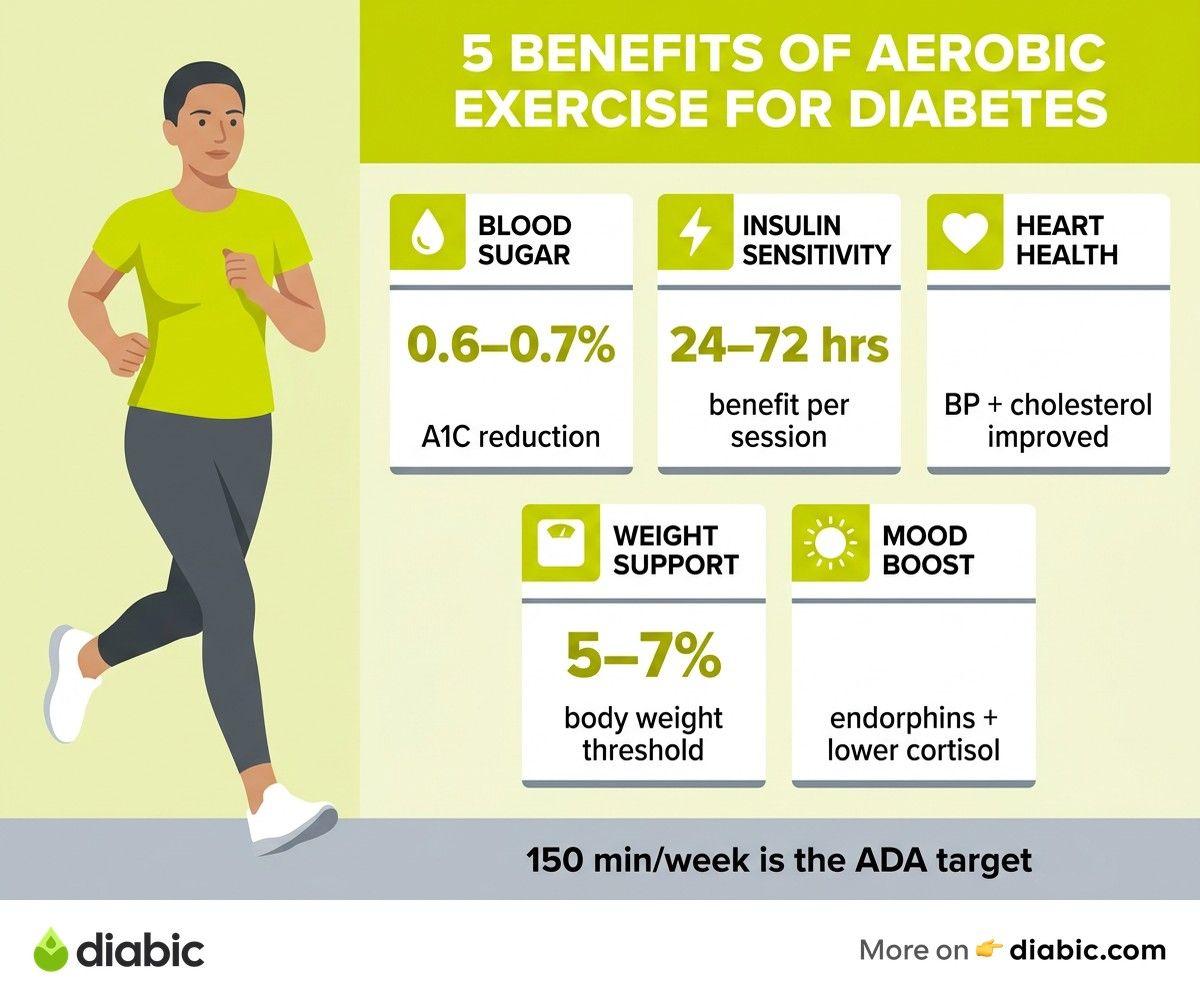
According to the American Diabetes Association, regular aerobic activity contributes to lower fasting blood glucose and a meaningful drop in A1C over time. A widely cited meta-analysis published in Diabetes Care found that structured aerobic training reduced A1C by roughly 0.6 to 0.7 percentage points in adults with type 2 diabetes. That kind of change is similar to what some medications produce.
The takeaway is practical. A 20-minute walk after dinner is not a small thing. It can blunt the rise in blood sugar that often follows the largest meal of the day, and the effect compounds when it becomes a habit.
Benefit 2: Better Insulin Sensitivity
Research on aerobic exercise and diabetes keeps coming back to one word: sensitivity. Insulin sensitivity describes how readily your cells respond to insulin and let glucose in. When sensitivity is low, your pancreas has to work harder, blood sugar runs higher, and the cycle reinforces itself.
A single aerobic session can improve insulin sensitivity for the next 24 to 72 hours, which is why consistency tends to matter more than intensity. Three or four moderate sessions spread across the week generally beat one hard workout followed by days of inactivity. Your muscles essentially stay "primed" to use glucose efficiently when activity is regular.
This is also why people often notice steadier readings within a couple of weeks of starting a new routine, even before any weight changes show up. The metabolic shift happens at the cellular level first.
Benefit 3: Heart Health Protection
Cardiovascular disease remains the leading cause of death in people with diabetes, which makes this benefit hard to overstate. The good news is that aerobic exercise targets nearly every risk factor at once. It lowers blood pressure, improves cholesterol ratios, reduces resting heart rate, and helps blood vessels stay flexible.
The American Heart Association and the ADA both recommend at least 150 minutes of moderate aerobic activity per week, ideally spread across several days. That is the threshold where cardiovascular benefits become consistent in research, though any movement above zero is better than none.
If you are not sure where to start, our diabetes exercise routine for beginners walks through a gentle weekly structure that builds up gradually. The goal is not to crush a workout. It is to build a heart-protective habit you can sustain for years.
Benefit 4: Weight Management Support
How does exercise benefit diabetes when it comes to weight? Aerobic activity burns calories during the session and slightly raises metabolic activity afterward. More importantly, it supports the kind of long-term weight maintenance that pure dieting often struggles to deliver.
For people with type 2 diabetes, even a modest 5 to 7 percent reduction in body weight can produce measurable improvements in blood sugar, blood pressure, and cholesterol. Exercise alone rarely drives dramatic weight loss, but combined with mindful eating, it shifts the math in your favor and protects lean muscle while you lose fat.
If weight is part of your management plan, our guide on weight loss and type 2 diabetes breaks down what actually moves the needle versus what just sounds good on social media.
Benefit 5: Improved Mood and Stress Reduction
The mental side of diabetes does not get talked about enough. Burnout, anxiety about numbers, and the daily grind of decisions can wear anyone down. Aerobic exercise is one of the most reliable mood boosters available, and the effect is not in your head, or rather, it literally is.
Moderate aerobic activity triggers the release of endorphins and supports the regulation of cortisol, the body's main stress hormone. Lower chronic stress means more stable blood sugar, since cortisol pushes glucose up. The loop works in your favor when you move regularly.
From my experience: After fourteen years with diabetes, the days I skip exercise are the days my numbers and my mood both drift. A 30-minute walk is not a magic fix, but I have learned to treat it as non-negotiable medicine. It is the single habit that has carried me through the hardest stretches of management.
Best Aerobic Exercises for People with Diabetes
The best aerobic exercise is the one you will actually do. That said, certain activities tend to be especially friendly for people managing blood sugar and joint health. Brisk walking is the most accessible, requires no equipment, and is gentle on the knees and hips.
Swimming and water aerobics are excellent if you have neuropathy or joint pain, since the water supports your weight. Cycling, whether outdoors or on a stationary bike, builds endurance without much impact. Dancing, hiking, and low-impact aerobics classes all count too, and they have the bonus of being social.
If you are completely new to structured movement, our piece on exercise for type 2 diabetes explains how to ease in without overdoing it. Start with 10 to 15 minutes per session, build to 30 minutes most days, and aim for that 150-minute weekly target over the course of a month or two.
FAQ
What aerobic exercises are best for people with diabetes?
Brisk walking, swimming, cycling, and dancing are all strong options for people with diabetes. Choose activities you genuinely enjoy and can sustain across seasons and moods. Start with 10 to 15 minutes per session and build gradually toward at least 30 minutes on most days.
How does aerobic exercise lower blood sugar?
During aerobic exercise, your muscles contract and absorb glucose from the bloodstream without needing as much insulin. The effect continues for hours after the workout, helping keep blood sugar levels lower throughout the day. Regular sessions also improve how your cells respond to insulin overall, which compounds the benefit over time.
The connection between aerobic exercise and diabetes is one of the few places where the science, the lived experience, and the daily practice all line up. You do not need a gym, a coach, or a perfect plan to start. A pair of comfortable shoes and twenty minutes is enough to begin building something real, and that something tends to grow when you let it.
If you want help structuring a routine that fits your week and your fitness level, talk to your doctor or a certified diabetes educator before making big changes. They can help you adjust medications, watch for hypoglycemia, and pace yourself safely.
Shahriar P. Shuvo is the founder of Diabic. He has lived with diabetes for over 14 years, and built Diabic to deliver the practical, evidence-based self-management tools he wished existed when he was first diagnosed. By trade, Shahriar is a senior design and frontend engineer with 6+ years shipping products at Agora, Timescale (now Tiger Data), and ShareTrip. He writes from the intersection of lived diabetes experience and product craft, focused on what works in daily management rather than what sounds good in a textbook.
Medically reviewed by
Dr. Shanto Arian is an internal medicine physician now specializing in clinical and aesthetic dermatology, with a parallel academic focus on epidemiology and public health. He holds an MBBS, MPH, MSc (UK), MRCP (UK), MRCPI (Ireland), Diploma in Dermatology (UK), and Diploma in Aesthetic Medicine (USA). Dr. Arian trained in internal medicine, including hospital work on hematology cases such as graft-versus-host disease, before moving toward dermatology. Skin is one of the earliest places diabetes shows itself, from acanthosis nigricans and diabetic dermopathy to slow foot wound healing, and that intersection is where his clinical and Diabic-review work meet. On Diabic, Dr. Arian medically reviews content on diabetes diagnosis, complications, dermatologic manifestations, and pharmacotherapy, ensuring every claim aligns with current ADA, NICE, and peer-reviewed literature.
More from Diet & Fitness
View all
7 Sweet Potato Diabetes Recipes That Keep Blood Sugar Steady
Seven sweet potato diabetes recipes with balanced macros, plus the cooking methods and portion tips that keep this naturally sweet vegetable blood-sugar.

Diabetes Pasta Recipes That Won't Spike Blood Sugar
Five diabetes pasta recipes that keep blood sugar steady, plus the cooking trick and pasta swaps that lower glycemic impact for everyday meals.

Chinese Recipes for Diabetes That Taste Like Takeout
Chinese recipes for diabetes that recreate takeout favorites at home with low-sugar swaps, controlled portions, and stir-fries that keep blood sugar.
Clinician-reviewed habits, plain-language guides, and honest answers - the small shifts that make living with diabetes feel lighter, every day.