Secondary Diabetes: When Another Condition Is the Cause
Secondary diabetes develops because of another medical condition or medication. Learn the causes, how it differs from type 2, and how it's managed.

In this article(10)
Most people think of diabetes as either type 1 or type 2, but secondary diabetes is a distinct category where another medical condition or medication is the root cause of high blood sugar. Understanding this category matters because treating the underlying problem, rather than just managing the numbers, can change the outcome significantly. In some cases the diabetes resolves entirely. In others, the lifelong picture looks more familiar, but the treatment plan is shaped by the condition that caused it.
This guide walks through what the diagnosis means, the conditions and medications most often involved, how it is recognized, and what daily life looks like for people managing both their primary condition and the diabetes that came with it. The goal is to make a confusing category feel more navigable for the people living through it.
If you have recently learned that your diabetes is secondary to another diagnosis, you are not alone, and the path forward is more individualized than the standard type 2 protocols you may have been handed.
What Secondary Diabetes Is
This category describes a form of diabetes that develops as a direct result of another medical condition, a surgical procedure, or a medication. It sits apart from type 1 (autoimmune) and type 2 (driven by insulin resistance and metabolic factors) because the trigger is something specific and identifiable. Blood sugar rises because the pancreas has been damaged, hormones are disrupted, or a drug is interfering with insulin function.
The condition can be temporary or permanent depending on the cause. Some people see their blood sugar normalize once a steroid course ends. Others develop lasting diabetes after pancreatic surgery, and the management resembles type 1 because the insulin-producing cells are simply gone. The full clinical picture depends on what is driving it.
According to the American Diabetes Association, secondary forms of diabetes are recognized in the official classification as a category that includes pancreatic disease, endocrine disorders, drug-induced cases, and certain genetic syndromes. For people whose diabetes does not fit type 1 or type 2 cleanly, this broader category often holds the answer.
Many of the diabetes mellitus misconceptions we encounter come from the assumption that all diabetes follows the type 1 or type 2 path. This category is a useful reminder that the body has many ways to end up with elevated blood sugar, and that treatment should match the cause rather than the surface presentation. Some readers also confuse it with brittle diabetes, which describes a pattern of unstable glucose rather than a separate cause.
The distinction also matters for prognosis. A person whose diabetes resolves after stopping a medication has a very different outlook than someone whose pancreas was removed. Treating both as if they were type 2 misses the point on both ends.
From my experience: A reader once wrote in to share that she had been told she had type 2 for nearly two years before a hepatologist noticed her ferritin levels and ordered testing for hemochromatosis. The iron overload had quietly damaged her pancreas, and her diabetes had a clear underlying cause. Her treatment did not change overnight, but her care team and her sense of agency did. Knowing the cause gave her something concrete to address.
Conditions That Cause Secondary Diabetes
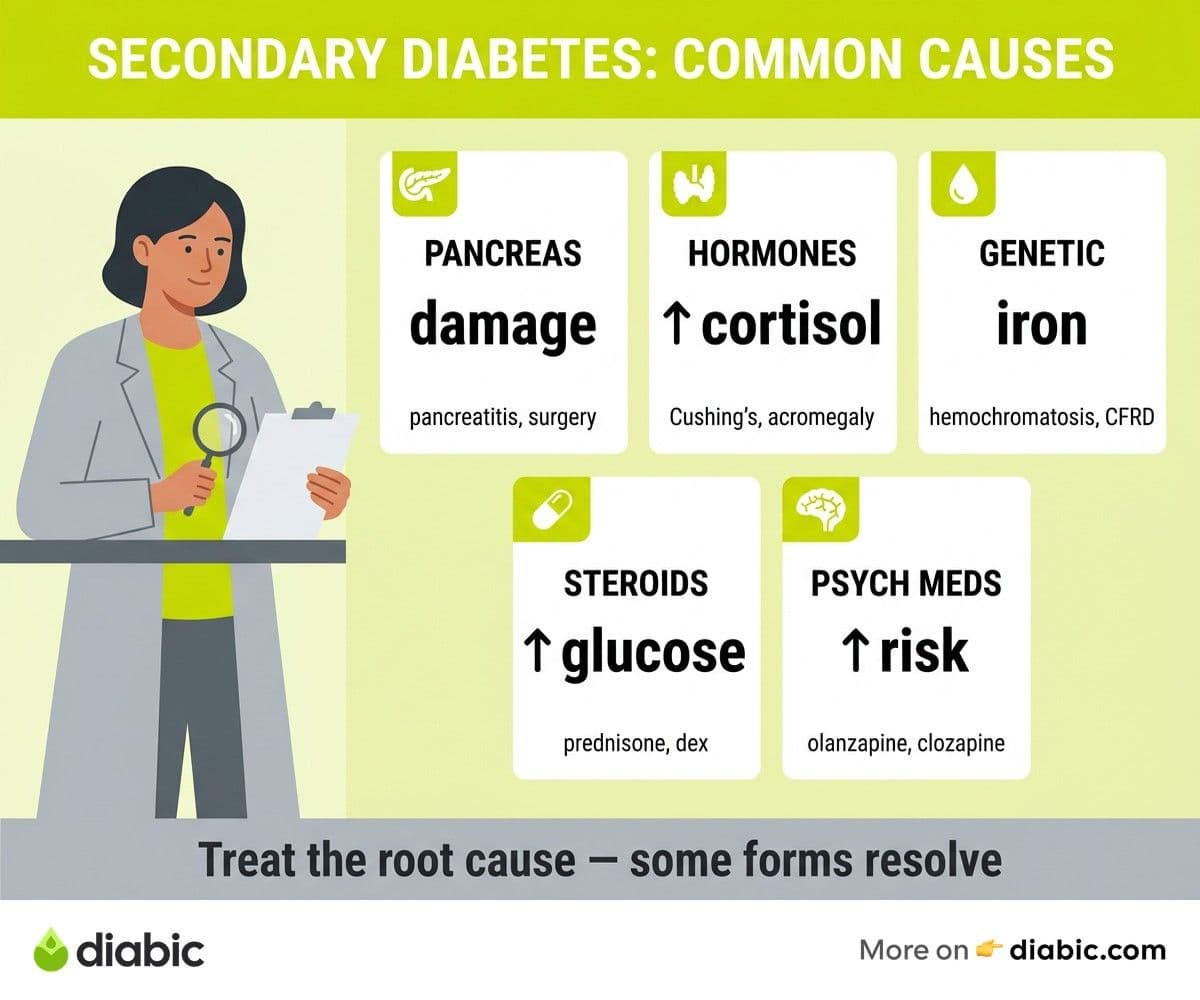
Several medical conditions can lead to this kind of high blood sugar by damaging the pancreas, disrupting hormones, or otherwise changing how the body handles glucose. According to the NIDDK, these are the most common categories clinicians look for when the diagnostic picture does not fit standard type 1 or type 2.
Pancreatitis, both acute and chronic, can damage the cells that produce insulin. After repeated episodes or longstanding chronic disease, the pancreas may lose enough beta cell function that diabetes develops. Pancreatic surgery, including the removal of part or all of the pancreas, has the same effect more abruptly. People who undergo total pancreatectomy live with a form of diabetes that resembles type 1 in its insulin requirements.
Cushing's syndrome involves chronic excess cortisol, which raises blood sugar by promoting glucose production and increasing insulin resistance. Acromegaly, a condition of excess growth hormone, has a similar effect. When the underlying endocrine disorder is treated, blood sugar often improves, although some people are left with lasting diabetes.
Cystic fibrosis-related diabetes is its own well-recognized form, affecting many adults living with cystic fibrosis. Hemochromatosis, an inherited condition of iron overload, can also damage the pancreas if not identified and treated early. Each of these conditions has specialty care pathways, and the diabetes is usually managed in coordination with the team treating the primary illness.
For a foundational refresher on how insulin and glucose work together, our overview of what is diabetes walks through the basics in plain language. That context makes the picture much easier to follow when you are reading about the conditions that disrupt the system.
Medications That Can Trigger Diabetes
Drug-induced diabetes is a recognized phenomenon, and the medications most often involved are common enough that millions of people take them. The risk is not a reason to avoid necessary treatment, but it is a reason to monitor blood sugar when these drugs are part of your care.
Corticosteroids, including prednisone and dexamethasone, are the most familiar trigger. They raise blood sugar by promoting glucose release from the liver and reducing insulin sensitivity. Short courses for asthma flares or autoimmune flares often cause temporary spikes that resolve when the steroid is tapered. Longer courses, especially in people with other risk factors, can lead to lasting diabetes.
Certain antipsychotic medications, particularly second-generation drugs like olanzapine and clozapine, are linked to weight gain and insulin resistance. People taking these medications for serious mental health conditions often face a tradeoff between symptom control and metabolic risk, and the conversation about that tradeoff belongs with their prescriber. Stopping or switching antipsychotic medication is rarely a simple decision.
Immunosuppressants used after organ transplant, including tacrolimus and cyclosporine, can also cause diabetes. So can some HIV/AIDS medications, particularly older protease inhibitors. According to Mayo Clinic resources on drug-induced diabetes, regular blood sugar monitoring is recommended for anyone starting or staying on these classes long term.
Management of medication-induced cases often combines blood sugar control through standard tools (lifestyle changes, oral medications, sometimes insulin) with a careful review of whether the offending drug can be reduced, replaced, or continued at a lower dose. The decision is rarely the patient's alone to make. It belongs to a conversation between the patient, the prescribing specialist, and the diabetes care team.
How This Form of Diabetes Is Diagnosed and Treated
Diagnosis usually starts with the same blood tests used for any form of diabetes: fasting glucose, HbA1c, and sometimes oral glucose tolerance testing. What sets this category apart is the investigative work that follows. Why is this person, who does not fit the type 1 or type 2 profile, presenting with hyperglycemia?
The investigation may include hormone testing, imaging of the pancreas, autoantibody panels to rule out type 1, and a careful review of every medication the person takes. Specialists across endocrinology, gastroenterology, and oncology may all be involved depending on what comes up. The goal is to identify whether there is an underlying condition that, if treated, could resolve or improve the diabetes.
Treatment plans vary widely based on the cause. Someone with pancreatic damage may need insulin from the start, since the beta cells are gone. Someone with Cushing's syndrome may see their blood sugar improve dramatically once the cortisol excess is corrected. Someone on long-term steroids may need temporary insulin during flares but no medication between them. The shared principle is that treating the underlying cause, when possible, comes first.
Blood sugar management itself uses the familiar tools: dietary adjustments, physical activity, oral medications, GLP-1 agonists, or insulin. The choice depends on the severity of the hyperglycemia and the individual's other health considerations. People whose presentation resembles type 2 may find that resources written for what is type 2 diabetes are helpful starting points, even though the cause is different.
When the condition becomes permanent, the long-term care plan looks much like any other form of diabetes. Regular monitoring, attention to cardiovascular risk, eye and kidney screening, and consistent follow-up with the care team all matter. The cause may have been unique, but the daily realities of living with diabetes are familiar.
Living With This Diagnosis Day to Day
Day to day, this form of diabetes often means coordinating two or more specialty teams. The endocrinologist managing your diabetes needs to know what your hepatologist, transplant team, or psychiatrist is doing, and vice versa. Some health systems make this easy. Others require more advocacy on the patient's part to keep everyone aligned.
Monitoring blood sugar alongside the primary condition is the practical core of management. People taking corticosteroids for an autoimmune flare may need to check more often during the flare and adjust their plan as the dose changes. People with cystic fibrosis-related diabetes integrate glucose monitoring into a daily routine that already includes other complex care. Each situation has its own rhythm.
Adjusting management as the underlying condition changes is something many people describe as the hardest part. A medication change can shift insulin needs significantly. A flare or infection can disrupt blood sugar for days. Building a flexible care plan, with input from your team about how to respond to common scenarios, makes the moving target easier to handle.
Connecting with others who share your specific underlying condition often helps more than general diabetes communities, because the everyday challenges are different. Patient organizations focused on cystic fibrosis, transplant recipients, or specific endocrine disorders frequently include diabetes resources tailored to their members. Our broader other-types library can serve as a starting point for understanding where your form fits in the larger picture.
Frequently Asked Questions
What conditions cause secondary diabetes?
Conditions that damage the pancreas, including pancreatitis, pancreatic surgery, and cystic fibrosis, are common causes. Hormonal disorders such as Cushing's syndrome and acromegaly raise blood sugar by promoting glucose production or insulin resistance, and genetic conditions like hemochromatosis can damage the pancreas through iron overload. Certain medications, especially corticosteroids and some antipsychotics, can also trigger diabetes as a side effect of treatment.
How is this different from type 2?
It has a specific identifiable cause, such as another medical condition or a medication, while type 2 develops from insulin resistance driven by genetics and lifestyle factors. Treatment may involve addressing the underlying condition, which can sometimes resolve or improve the diabetes itself. Type 2 management focuses on the diabetes directly through diet, activity, and medication tailored to insulin resistance.
Can it go away?
Some forms do resolve when the underlying cause is treated, such as steroid-induced cases that improve after the medication is tapered. Others become permanent, especially when the pancreas has been damaged by surgery or chronic disease. Talk to your doctor about what your specific cause means for the long-term outlook.
Is it dangerous?
It carries the same long-term risks as other forms of diabetes when it is poorly managed, including effects on the heart, kidneys, eyes, and nerves. With appropriate monitoring and treatment, most people in this group live full, healthy lives. The presence of an underlying condition adds complexity but does not change the importance of consistent blood sugar management.
If your diabetes started after another diagnosis or a new medication, ask your healthcare provider whether secondary diabetes is the right framing for what you are managing. Understanding the cause may open up treatment options that feel more aligned with your overall health.
Shahriar P. Shuvo is the founder of Diabic. He has lived with diabetes for over 14 years, and built Diabic to deliver the practical, evidence-based self-management tools he wished existed when he was first diagnosed. By trade, Shahriar is a senior design and frontend engineer with 6+ years shipping products at Agora, Timescale (now Tiger Data), and ShareTrip. He writes from the intersection of lived diabetes experience and product craft, focused on what works in daily management rather than what sounds good in a textbook.
Medically reviewed by
Dr. Rezwana Parvin Rumpa is an obstetrics and gynaecology specialist with clinical focus on gestational diabetes, PCOS, and fertility. She holds the MRCOG (Final Part) from the Royal College of Obstetricians and Gynaecologists in London, the MRCPI (Final Part) from the Royal College of Physicians of Ireland, and an MBBS from Shaheed Monsur Ali Medical College under Dhaka University. Dr. Rumpa serves as a Senior Medical Officer in the Obs and Gynae department at BRB Hospitals Ltd, where she has spent three years managing prenatal care, emergency obstetric cases, and women's-health surgery. On Diabic, she medically reviews content for women living with diabetes, with particular attention to pregnancy, PCOS, and reproductive-health intersections.
More from Diabetes Knowledge
View all
Can Diabetics Eat Fruit? Yes, Best Picks and Tips
Can people with diabetes eat fruit? Yes. Here is how to choose the right fruits, manage portions, and pair them smartly to keep blood sugar steady.

Newly Diagnosed Type 2 Diabetes: Where to Start
Newly diagnosed type 2 diabetes feels overwhelming, but the first steps are simpler than you think. Get a clear, calm starting plan from day one.

Neonatal Diabetes: What Parents Should Know
Neonatal diabetes is rare and treatable. Learn the causes, how it differs from type 1, and what parents can expect from diagnosis through treatment.
Clinician-reviewed habits, plain-language guides, and honest answers - the small shifts that make living with diabetes feel lighter, every day.