Can Diabetics Eat Fruit? Yes, Best Picks and Tips
Can people with diabetes eat fruit? Yes. Here is how to choose the right fruits, manage portions, and pair them smartly to keep blood sugar steady.

In this article(13)
- Why the No Fruit Myth Persists
- How Fruit Affects Blood Sugar in Type 1 and Type 2 Diabetes
- What Fruits Are Best for People with Diabetes
- How Much Fruit Can You Eat Per Day
- Smart Ways to Pair Fruit for Steadier Blood Sugar
- Common Mistakes People Make with Fruit and Diabetes
- A Simple Framework: Can Diabetics Eat Fruit Day to Day?
If you have diabetes and have been told to avoid fruit entirely, you are not alone in feeling confused. The search query "can diabetics eat fruit?" comes up constantly online, and the answer that most credible health organizations give is a clear yes. People with diabetes can eat fruit, and most major guidelines actively encourage it.
The confusion makes sense. Fruit contains natural sugars, and many people with diabetes have been told to keep an eye on sugar. The leap from "watch your sugar" to "avoid all fruit" is understandable but not actually supported by the research.
The key lies in choosing fruits thoughtfully, watching portion sizes, and pairing them in ways that keep blood sugar steady. This guide walks through how to do all three, with the caveat that individual responses vary and your own experience with a glucose meter is the best teacher.
Why the No Fruit Myth Persists
The fear of fruit sugar comes from a real-sounding but oversimplified concern. Fruits contain fructose, a natural sugar that does affect blood glucose. From there, some people make the leap that fruit is dangerous for anyone with diabetes. Major diabetes organizations have been working to correct this for decades.
The natural sugars in whole fruit behave very differently from added sugars in processed foods. Whole fruit comes packaged with fiber, water, vitamins, antioxidants, and a complex matrix that slows glucose absorption. A slice of cake and an apple may both contain sugar, but they affect the body in dramatically different ways. Our explainer on the real relationship between sugar and diabetes digs into the broader sugar question.
Long-term research consistently supports including fruit in a diabetes-friendly diet. A large study published in the BMJ found that whole fruit consumption was actually associated with a lower risk of developing type 2 diabetes, even though fruit juice consumption was associated with higher risk. The difference between whole fruit and juice matters enormously, a point we will come back to later.
Blanket fruit avoidance has its own costs. Fruits provide fiber, potassium, vitamin C, polyphenols, and other nutrients that support cardiovascular health, gut health, and overall well-being, all of which matter especially for people managing diabetes. Cutting them out without medical reason often does more harm than good.
How Fruit Affects Blood Sugar in Type 1 and Type 2 Diabetes
Looking at fruit through the lens of type 1 vs type 2 diabetes helps clarify why responses can vary even when people eat the same thing. Both types involve blood glucose regulation, but the practical considerations differ in meaningful ways.
For type 1 diabetes, the question is mostly about insulin timing and dosing. The body produces no insulin, so every gram of carbohydrate, including fruit sugar, has to be matched with a meal-time insulin dose. Fruit's fiber content slows absorption, which can require adjusting the timing of insulin slightly compared to faster-absorbing carbs. Continuous glucose monitors have made this much easier to fine-tune in recent years.
For type 2 diabetes, the body still produces some insulin but does not respond to it as effectively. Fiber, water content, and glycemic index all influence how a fruit affects blood glucose. Whole fruits with intact fiber tend to produce a slower, smaller blood sugar rise than processed equivalents. Insulin resistance affects how big and how long that rise lasts, but it does not make whole fruit off-limits.
A significant point that often gets missed: whole fruit and fruit juice behave very differently. A whole orange contains roughly 12 grams of carbohydrate plus 3 grams of fiber, eaten over several minutes. A small glass of orange juice contains the carb load of two or three oranges, with most of the fiber stripped out, consumed in seconds. The blood sugar impact is dramatically different even though the source ingredient is the same.
Personal monitoring is the best way to learn how specific fruits affect your own blood sugar. The same banana may spike one person and barely move another's glucose, depending on insulin sensitivity, what else they ate, and even time of day.
What Fruits Are Best for People with Diabetes
The honest answer to "what fruits are best for people with diabetes" is that most fruits can fit into a diabetes-friendly diet, with some being easier on blood sugar than others. The Harvard T.H. Chan School of Public Health maintains glycemic index data showing how different fruits compare.
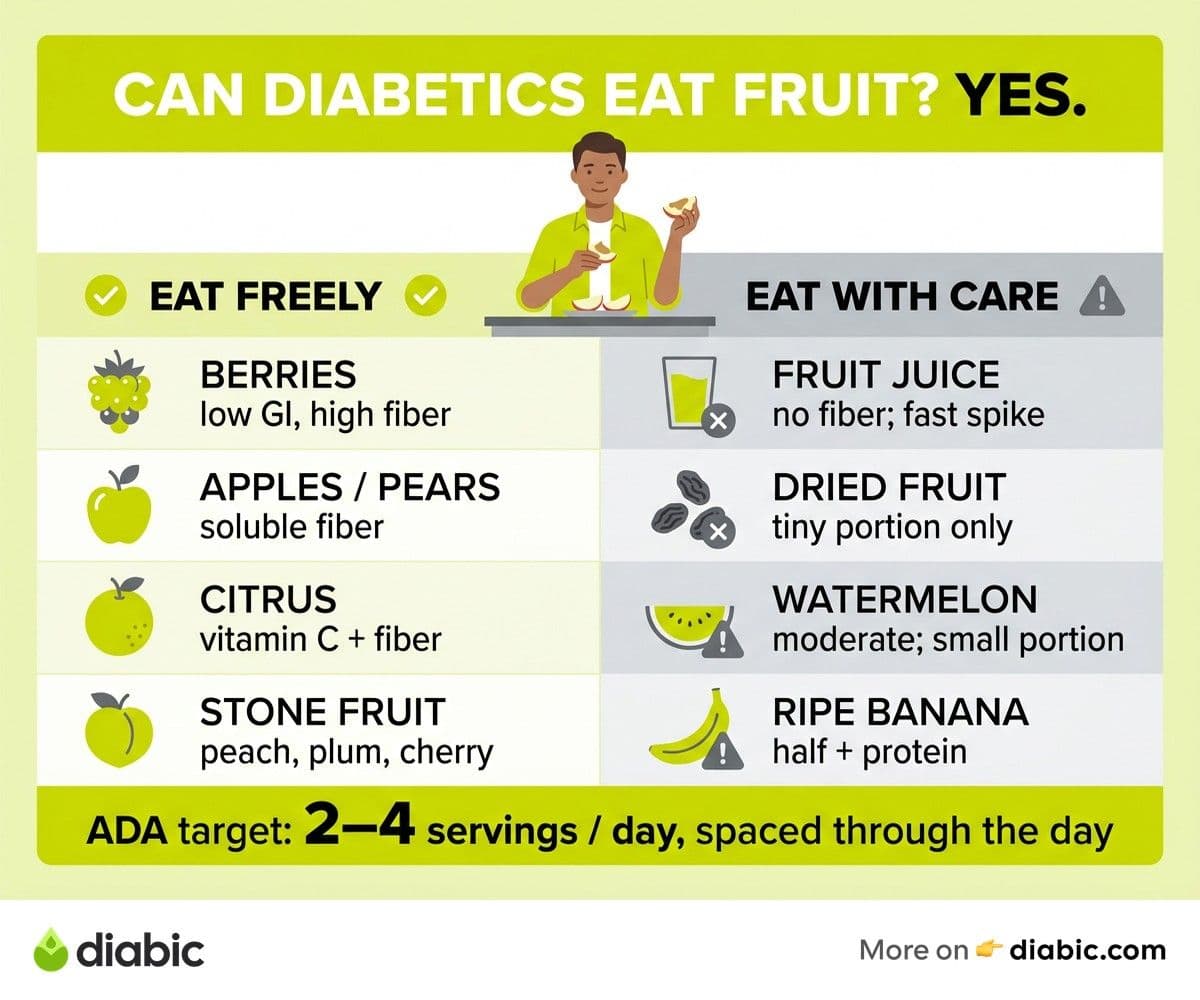
Lower glycemic options that tend to produce smaller blood sugar rises include:
- Berries (strawberries, blueberries, raspberries, blackberries) for their high fiber and antioxidant content
- Citrus fruits (oranges, grapefruit, mandarins) with strong fiber and vitamin C
- Stone fruits (peaches, plums, apricots, cherries) for moderate carbs and good fiber
- Apples and pears for their soluble fiber and slow glucose release
- Kiwi and most melons (cantaloupe, honeydew) in reasonable portions
Moderate options that are fine in standard portions but worth tracking include grapes, pineapple, and mango. These fruits tend to have a higher glycemic index, but pairing them with protein or healthy fat (more on that below) can blunt the blood sugar response significantly.
Fruits to enjoy in smaller portions include bananas (especially ripe ones), watermelon, dried fruits, and tropical fruits like dates. None of these need to be off-limits. A few cubes of watermelon on a hot day or half a banana with peanut butter can fit comfortably into most diabetes meal plans.
Here is how common fruits stack up for everyday planning:
The principle worth remembering is that no single fruit is dangerous, and no single fruit is a free pass. Variety, portion awareness, and personal monitoring matter more than any individual fruit choice.
How Much Fruit Can You Eat Per Day
The general guidance from the American Diabetes Association is that most adults with diabetes can include 2 to 4 servings of fruit per day, depending on their overall carbohydrate goals and individual response. A serving is roughly:
- One small whole fruit (a tennis-ball-sized apple or orange)
- Half a cup of chopped or canned fruit (in water or juice, not syrup)
- One cup of berries or melon
- Two tablespoons of dried fruit (much smaller than fresh because the sugars are concentrated)
Spacing fruit intake throughout the day, rather than eating several servings at once, tends to produce steadier blood sugar. A piece of fruit at breakfast, half a cup of berries with lunch, and a small handful of grapes as an afternoon snack adds up to plenty of fruit without overwhelming the system at any one moment.
Working with a registered dietitian or certified diabetes educator can help you set personalized targets. They can build a meal plan that fits your specific carbohydrate budget, medication regimen, and food preferences. Many insurance plans cover diabetes nutrition counseling, especially after a recent diagnosis.
It is also fair to ask your doctor about specific situations. If your A1c is currently above target, your provider may suggest temporarily tightening fruit portions while other adjustments take effect. Once things stabilize, fruit can usually return to a more flexible role.
Smart Ways to Pair Fruit for Steadier Blood Sugar
Pairing fruit with protein or healthy fat is one of the most effective tricks for keeping blood sugar steady. Protein and fat slow gastric emptying, which means the carbohydrates from fruit enter the bloodstream more gradually, a pattern the CDC's diabetes meal planning guide explicitly recommends. This often turns a mild blood sugar rise into something even smaller.
Practical pairings that may help include:
- Apple slices with a tablespoon of nut butter
- Berries with plain Greek yogurt or cottage cheese
- A pear with a small piece of cheese
- A handful of grapes with a few almonds or walnuts
- Half a banana with peanut butter on whole-grain toast
Eating fruit after a meal, rather than alone on an empty stomach, can also help. The fiber, fat, and protein from the rest of the meal slow the overall digestive process, which blunts the post-meal glucose rise. Fruit as dessert is a long-standing tradition in many cultures, and there is good metabolic logic behind it.
Time of day plays a smaller but real role. Many people are slightly more insulin resistant in the morning due to natural cortisol patterns, which can mean a higher blood sugar response to fruit at breakfast than later in the day. If you notice this pattern in your own readings, you might shift your fruit servings toward lunch and afternoon snacks.
For people interested in broader nutrition strategy, our guide on what to eat and limit with prediabetes covers complementary food pairings that support metabolic health.
From my experience: I have lived with type 1 diabetes for fourteen years, and fruit was one of the things I worried about most when I was first diagnosed. Over time, I have learned that an apple paired with a piece of cheddar barely moves my blood sugar, while a smoothie with the same amount of fruit blended in spikes me sharply. The difference is the food matrix. Whole fruit, eaten slowly and ideally with some protein or fat, is one of my reliable everyday foods. Juice, dried fruit, and blended drinks need much more careful handling.
Common Mistakes People Make with Fruit and Diabetes
A few common patterns trip people up more than the actual fruit choices. The first is treating dried fruit as interchangeable with fresh. Dried fruit has the water removed, which concentrates the sugars dramatically. A small handful of raisins contains the sugar of several whole grapes, but the volume looks tiny by comparison. Portion sizes for dried fruit need to be much smaller, often just a tablespoon or two.
Choosing fruit juice as a "healthy" option is another common pitfall. Juice contains the carbs of multiple fruits with most of the fiber removed, and it absorbs very quickly. Even 100 percent fruit juice can produce sharp blood sugar spikes. Most diabetes guidelines recommend treating juice as a treat rather than a daily beverage, and using small amounts (4 ounces) primarily for treating low blood sugar episodes.
Eating large portions of high-sugar fruit in one sitting is the third trap. A whole cantaloupe is mostly water, but a large bowl of cantaloupe still contains a meaningful carb load. The same is true of grapes, where it is easy to absentmindedly eat several cups while watching a movie. Pre-portioning fruit, eating from a plate rather than a container, and combining it with protein all help.
The opposite mistake is also common: avoiding all fruit and missing out on essential nutrients. People who cut out fruit entirely sometimes end up with lower fiber intake, higher blood pressure, and worse cardiovascular markers. The benefits of fruit, when eaten thoughtfully, generally outweigh the modest blood sugar impact for most people with diabetes.
Our broader piece on weight and diabetes myths addresses the wider tendency to over-restrict food choices in pursuit of perfect blood sugar, which often does not pan out the way people hope.
A Simple Framework: Can Diabetics Eat Fruit Day to Day?
Putting all of this together, a workable approach to fruit and diabetes looks something like this. Choose mostly whole fruits over juice or dried versions. Aim for variety, including berries, citrus, stone fruits, and apples or pears as everyday options. Keep portions to one cup of berries or melon, one small whole fruit, or half a cup of chopped fruit per serving. Pair fruit with protein or healthy fat when convenient. Watch your own glucose response to learn how specific fruits affect you personally.
These habits will not eliminate every blood sugar fluctuation, but they make fruit a reliable, enjoyable part of a diabetes-friendly diet rather than a source of constant worry. Most people find that once they have spent a few weeks experimenting with portions and pairings, fruit becomes one of the easier foods to fit into their plan.
Talk to your doctor or a registered dietitian if you want personalized guidance, especially if your A1c is not where you want it or if you take medications that interact with carbohydrate intake.
FAQ
What fruits are best for people with diabetes?
Berries, citrus fruits, stone fruits, apples, and pears tend to have a lower glycemic impact and are good everyday choices. Most fruits can fit into a diabetes-friendly diet when eaten in reasonable portions. There is no single fruit that is off-limits for everyone with diabetes.
How much fruit can a person with diabetes eat per day?
Most guidelines suggest 2 to 4 servings per day, depending on your overall carbohydrate goals. A serving is roughly one small whole fruit, half a cup of chopped fruit, or one cup of berries. Spacing servings across the day rather than eating them all at once helps keep blood sugar steadier.
Is fruit juice okay for people with diabetes?
Whole fruit is almost always a better choice than juice. Juice contains the sugars of multiple fruits with most of the fiber removed, which means it absorbs quickly and can spike blood sugar sharply. Most diabetes guidelines recommend limiting juice and using small amounts mainly to treat low blood sugar.
Are bananas bad for diabetes?
Bananas are not bad for diabetes when eaten in reasonable portions. A small or half banana paired with protein or healthy fat fits into most diabetes meal plans. Riper bananas have a slightly higher glycemic index than greener ones, so timing and portion size matter.
Should I avoid dried fruit if I have diabetes?
You do not need to avoid dried fruit, but portions need to be much smaller than for fresh fruit because the sugars are concentrated. A tablespoon or two of raisins, dried cranberries, or chopped dates is a reasonable serving. Reading nutrition labels and looking for varieties without added sugar helps.
So can diabetics eat fruit? Yes, with attention to type, portion, and pairing. People with diabetes do not need to give up the foods that make eating enjoyable, and fruit in particular has earned its place in a thoughtful diabetes meal plan. Use your glucose meter or continuous glucose monitor as your personal guide, work with your healthcare team, and trust that whole fruit is on your side more often than not.
Shahriar P. Shuvo is the founder of Diabic. He has lived with diabetes for over 14 years, and built Diabic to deliver the practical, evidence-based self-management tools he wished existed when he was first diagnosed. By trade, Shahriar is a senior design and frontend engineer with 6+ years shipping products at Agora, Timescale (now Tiger Data), and ShareTrip. He writes from the intersection of lived diabetes experience and product craft, focused on what works in daily management rather than what sounds good in a textbook.
Medically reviewed by
Dr. Shanto Arian is an internal medicine physician now specializing in clinical and aesthetic dermatology, with a parallel academic focus on epidemiology and public health. He holds an MBBS, MPH, MSc (UK), MRCP (UK), MRCPI (Ireland), Diploma in Dermatology (UK), and Diploma in Aesthetic Medicine (USA). Dr. Arian trained in internal medicine, including hospital work on hematology cases such as graft-versus-host disease, before moving toward dermatology. Skin is one of the earliest places diabetes shows itself, from acanthosis nigricans and diabetic dermopathy to slow foot wound healing, and that intersection is where his clinical and Diabic-review work meet. On Diabic, Dr. Arian medically reviews content on diabetes diagnosis, complications, dermatologic manifestations, and pharmacotherapy, ensuring every claim aligns with current ADA, NICE, and peer-reviewed literature.
More from Diabetes Knowledge
View all
Newly Diagnosed Type 2 Diabetes: Where to Start
Newly diagnosed type 2 diabetes feels overwhelming, but the first steps are simpler than you think. Get a clear, calm starting plan from day one.

Secondary Diabetes: When Another Condition Is the Cause
Secondary diabetes develops because of another medical condition or medication. Learn the causes, how it differs from type 2, and how it's managed.

Neonatal Diabetes: What Parents Should Know
Neonatal diabetes is rare and treatable. Learn the causes, how it differs from type 1, and what parents can expect from diagnosis through treatment.
Clinician-reviewed habits, plain-language guides, and honest answers - the small shifts that make living with diabetes feel lighter, every day.